
Fox Lake
“Friendly, skilled, honest and reliable.”Read on Google
Protect frozen food and stable temperatures
Freezer repair for thawing, frost buildup, temperature alarms, leaks, and ice production problems.
Start with the symptoms
Freezer failures are time-sensitive. Our technicians inspect temperatures, airflow, door sealing, defrost operation, and the refrigeration system to identify the cause.
Brand coverage
Model and parts availability vary. Share the model number when booking so the local team can prepare for the visit.
Local scheduling
Five-star Google reviews
Short excerpts from recent five-star customer reviews. Open Google to read the full feedback and current profile details.
“Friendly, skilled, honest and reliable.”Read on Google
“Professional, knowledgeable and fast work.”Read on Google
“Great all around service.”Read on Google
“Great service; fixed the washer.”Read on Google
Repair guidance
A useful service page should explain more than a list of faults. Here is how diagnosis, timing, local coverage, and the repair decision work for freezer repair.
A freezer problem is time-sensitive because appearance and odor do not prove that food remained at a safe temperature. Keep the door closed, verify temperature with a reliable thermometer when possible, and move food to dependable cold storage if the cabinet rises. The technician then checks actual temperature, airflow, frost pattern, door sealing, defrost operation, fans, sensors, controls, and sealed-system performance without relying only on the display.
A light interior frost film may follow frequent door opening, while a snow pattern near the door suggests sealing or closure. A solid frost mass behind an evaporator cover can indicate a defrost or airflow failure. Ice on the floor may come from a blocked defrost drain or water system. Photographing the frost before defrosting the unit can preserve useful evidence, but heavy ice should not be chipped with sharp tools.
Chest freezers lose less cold when opened but use different controls and access than uprights. Frost-free uprights add fans and defrost systems. Built-in freezer columns may share controls, water, or installation details with adjacent refrigeration. The model type determines the expected frost pattern, temperature recovery, and repair access. Sealed-system work is evaluated separately from fan, gasket, drain, sensor, and control repairs.
Common questions
Keep the door closed, confirm power, check the temperature, and move food to safe storage when necessary. Note alarms, sounds, frost, and whether the compressor or fans are running.
A blocked or frozen defrost drain can send meltwater into the cabinet. Water-system leaks and door-related condensation are other possibilities, so the source should be confirmed.
Yes. Restricted airflow, heavy frost, poor sealing, fan failure, dirty condenser conditions, low sealed-system capacity, or sensor and control faults can keep it running without reaching setpoint.
Yes, for supported built-in models including premium columns and drawers. Model information and installation details are important for scheduling and access.
Local service pages
Use the local page for verified contact details, nearby coverage, and location-specific scheduling.
Helpful guides
Browse focused symptoms without turning the service page into a long article directory.

A model-aware guide to a warm Sub-Zero freezer, rising temperatures, frost patterns, fan operation, door sealing, and refrigeration capacity.
Read guide
Use actual freezer temperature, frost location, fan behavior, drawer sealing, and ice production to diagnose a warm Sub-Zero 611 freezer.
Read guide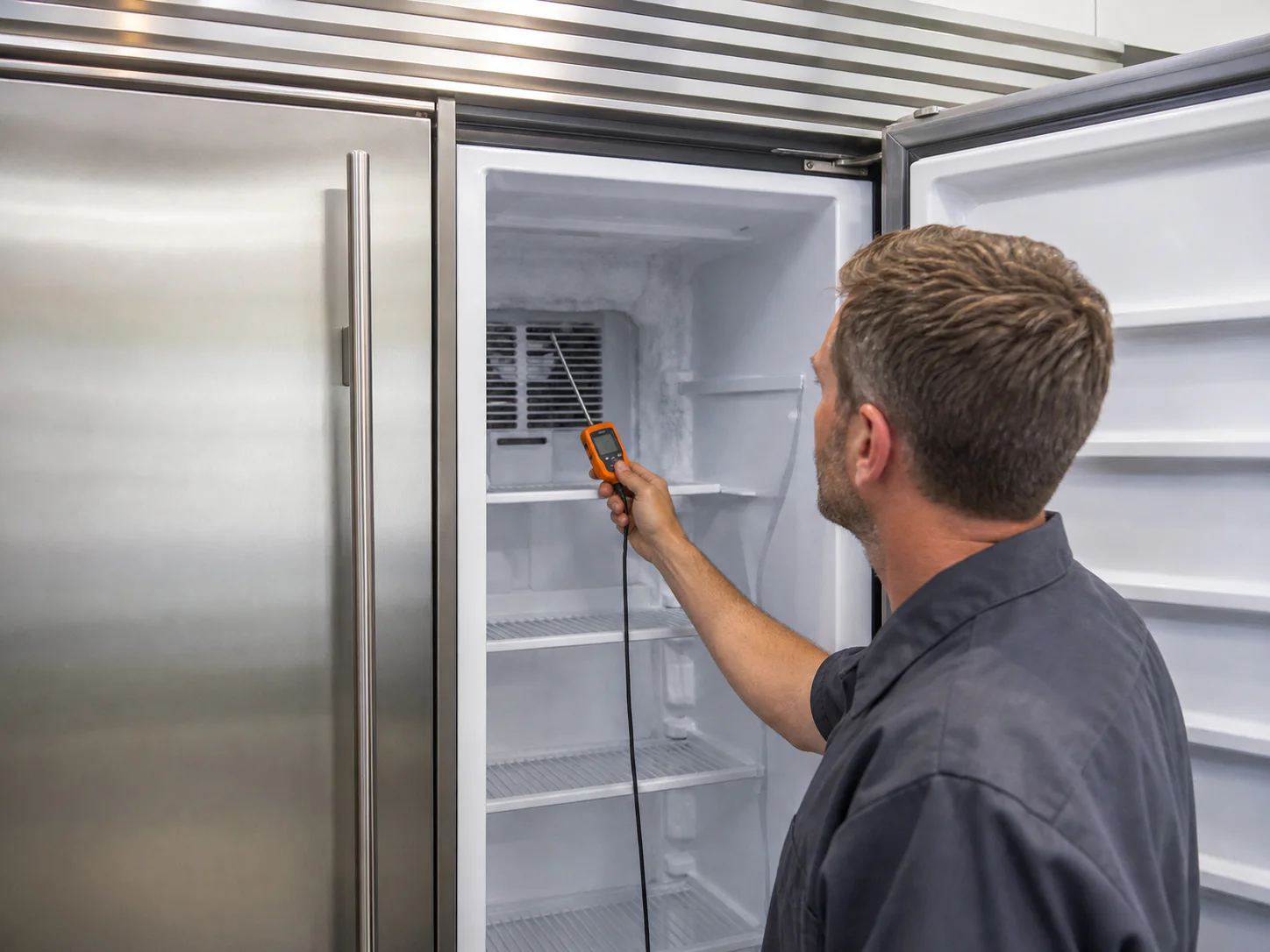
Trace a warm Sub-Zero 661 freezer through actual temperature, frost pattern, fan airflow, full-height door sealing, sensing, and refrigeration capacity.
Read guideRequest service
Choose the appliance and share any helpful details. We will confirm availability and the next practical appointment window.
Prefer to call?(773) 771-6118