
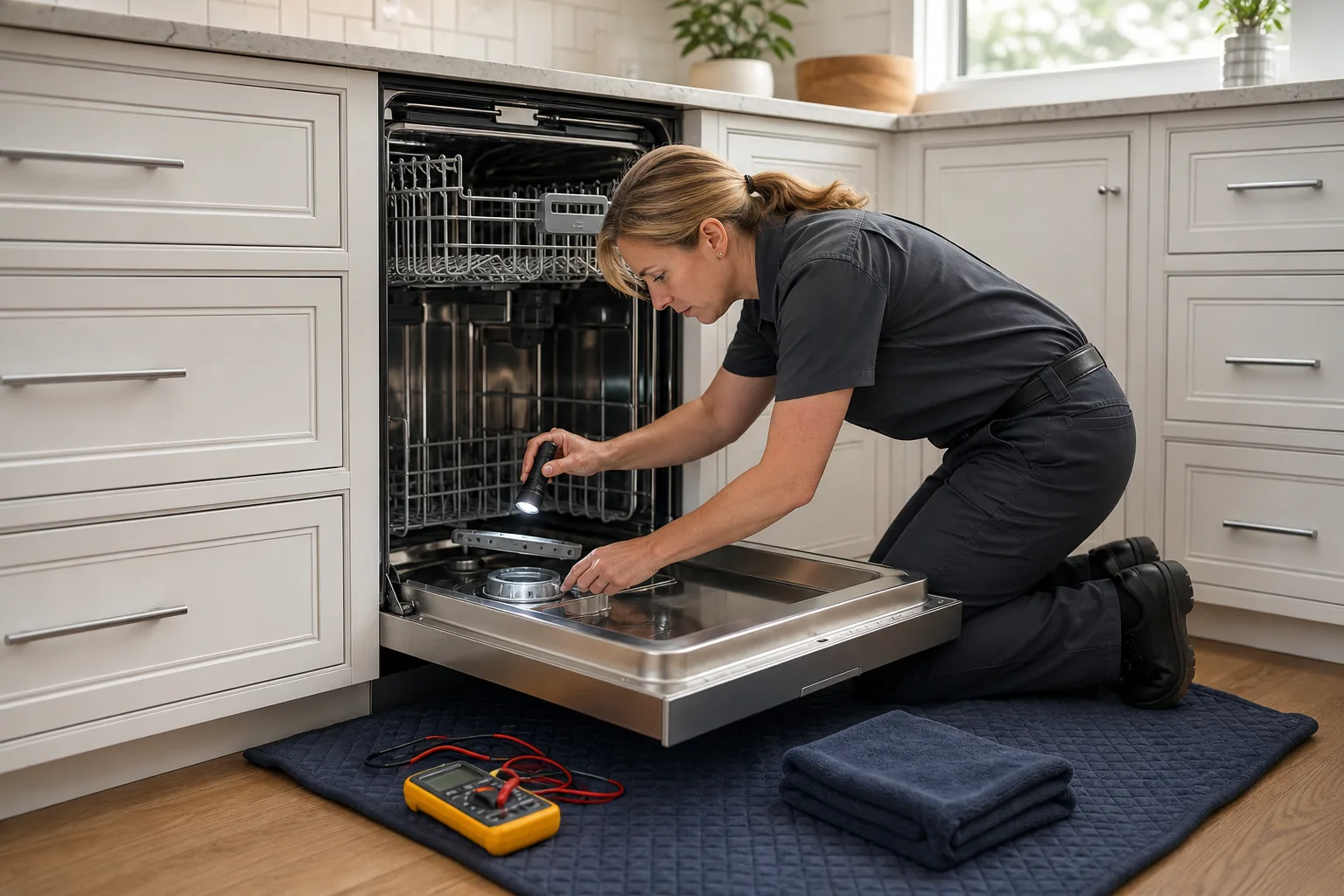
Viking dishwasher offerings span 3, 5, and 7 Series, stainless and custom-panel fronts, and configurations with additional water-treatment features. A no-drain complaint, leak, poor wash result, or drying problem must be tied to the cycle stage. Series and option differences affect pumps, controls, racks, sensors, and service access.
Identify the exact equipment first
- 3 Series dishwasher models
- 5 Series standard and water-softener configurations
- 7 Series dishwasher models
- Professional stainless and custom-panel installations
- Photograph the complete Viking model and serial tag before scheduling service
Protect people, property, and stored product first. Stop for gas odor, smoke, damaged wiring, active leaks near electrical parts, or repeated breaker trips. Leave internal gas, refrigerant, and live-voltage testing to a qualified technician.
Systems that shape the diagnosis
Fill and water treatment
Inlet flow, household shutoff, screens, valves, water level, and model-specific softener systems can affect cleaning before the wash motor is blamed.
Wash circulation
Spray arms, filters, sump conditions, circulation pumps, and loading shape wash pressure. Poor cleaning with a completed cycle is different from a unit that never fills.
Drain and leak paths
Drain hoses, pumps, check valves, seals, door gaskets, and base trays can place water in different locations. Trace the source through the cycle instead of following the final puddle.
Heat and drying
Water heating, temperature sensing, ventilation, rinse aid, and drying systems interact. Wet plastics alone are not the same symptom as water that never reaches temperature.
How the dishwasher format changes diagnosis
Record the series, full code, cycle stage, whether water enters, whether spray is heard, where water remains, and the exact leak location. Run only safe observations; stop for water near electrical parts, repeated breaker trips, or signs of overheating.
Repair planning, access, and installation
Custom panels add weight and can change door balance. Removal beneath stone counters requires attention to mounting brackets, flooring, water, drain, and electrical connections. A contained pump or sensor diagnosis should precede pulling the unit whenever possible.
Why the full model number matters
Viking currently uses series and option distinctions that can include water softening and panel configuration. The complete model tag identifies those features and prevents a 3 Series component from being assumed compatible with a 5 or 7 Series machine.
Frequently asked questions
What changes when a Viking dishwasher has a water softener?
The appliance adds model-specific water-treatment components and settings. Poor washing or fill behavior must account for that system as well as the standard inlet and wash paths.
Why does the dishwasher finish with water in the bottom?
A restriction, hose installation, pump, check valve, filter, control, or sink connection can interrupt draining. The point where flow stops needs testing.
Can a custom panel cause a door problem?
Panel weight, mounting, hinge tension, and alignment can affect balance and sealing. Inspect the installation before replacing the latch or gasket.
Where should I find the model number before Viking service?
Use the rating-plate location shown in the owner documentation for the exact dishwasher configuration. Photograph the complete plate rather than typing a partial number, because suffixes and production revisions can change parts and procedures.
Ghost Appliance Repair is an independent service company and is not affiliated with or endorsed by Viking or its manufacturer. Brand and family names identify the equipment discussed. Availability of service depends on the exact model, condition, parts support, and location.