
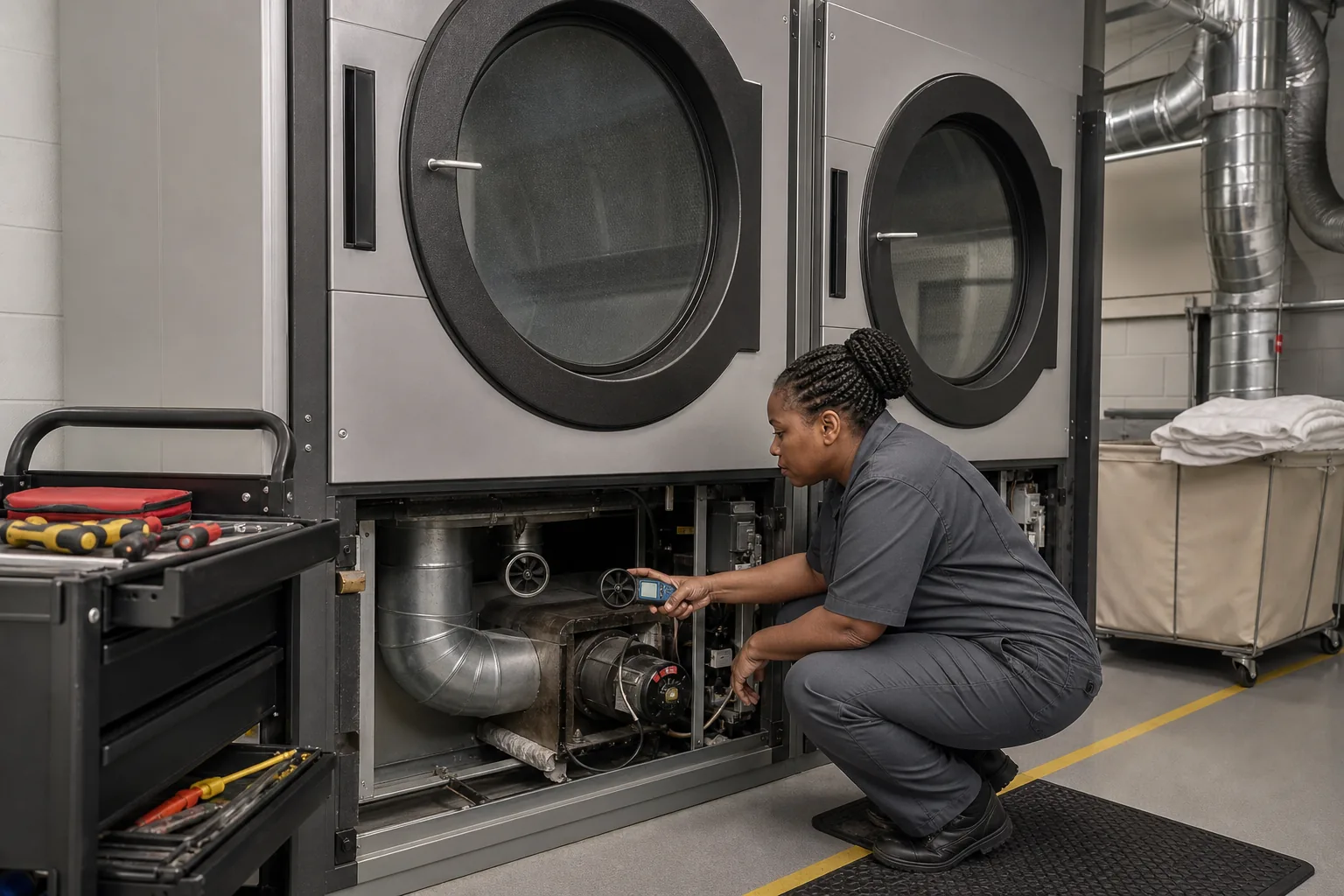
Commercial dryers depend on heat input, large-volume airflow, drum rotation, temperature control, and fire-safe lint management. A dryer can produce heat and still dry slowly if airflow is restricted, while a clean lint screen does not prove the duct, fan, makeup air, or burner is correct. Gas and electric configurations require different energy tests.
Identify the exact equipment first
- Identify gas, electric, or steam heat
- Record inlet, outlet, and exhaust temperatures
- Check drum rotation and load movement
- Inspect lint screens, compartments, fan, and accessible duct
- Note ignition, flame, high-limit, and cycle timing
- Photograph the complete manufacturer model and serial plate, including every suffix
Protect people, property, and stored product first. Shut affected equipment down for gas odor, smoke, arcing, exposed wiring, active water near electrical parts, unsafe temperatures, or repeated protection trips. Move temperature-sensitive product according to the business's food-safety plan and keep time-and-temperature records.
Systems that shape the diagnosis
Burner or element heat
Ignition, valves, burners, steam controls, elements, contactors, and supply determine energy input.
Airflow
Lint, fan condition, ducts, dampers, makeup air, and building pressure determine heat transfer and exhaust safety.
Temperature controls
Probes, thermostats, controls, and high limits regulate heat. Repeated limit trips indicate a condition to diagnose, not a reset routine.
Drum drive
Belts, rollers, bearings, motors, and inverters affect tumbling. Poor movement can lengthen drying even with normal heat.
What the diagnosis should prove
Measure heat rise and airflow through the complete machine and exhaust path, then compare drum operation and control cycling. For gas dryers, inspect ignition and combustion with the ventilation system operating. The appliance and building exhaust should be treated as one performance path.
Downtime, product, and operating context
Stop for smoke, scorching, gas odor, flame instability, repeated high-limit trips, damaged doors, or heavy lint accumulation in hot areas. Clear the machine and provide access to ducts and makeup-air openings. Record load type and cycle time before and after the fault.
Repair scope and replacement decisions
Belts, rollers, motors, fans, valves, ignition, elements, probes, and controls are common repairs. Drum damage, fire history, major duct deficiencies, obsolete burners, or severe frame wear may favor replacement or facility work. Correct exhaust conditions before installing a new dryer into the same problem.
Frequently asked questions
Why does a commercial dryer heat but take too long?
Restricted airflow, poor tumbling, overloaded cycles, incorrect controls, makeup-air problems, or weak heat input can all extend drying.
Can a clean lint screen rule out airflow trouble?
No. The fan, internal passages, duct, damper, termination, and makeup air can still be restricted.
Why does the high limit trip?
Restricted airflow, sensor or control faults, excessive heat input, fan problems, or actual overheating can trip protection. Do not bypass or repeatedly reset it.
What information should I send for commercial tumble dryer service?
Send the complete model and serial tag, power or fuel type, exact symptom, any code, measured temperatures when relevant, business hours, and clear photos of the installation and service access. Do not include customer or employee personal information in equipment photos.