
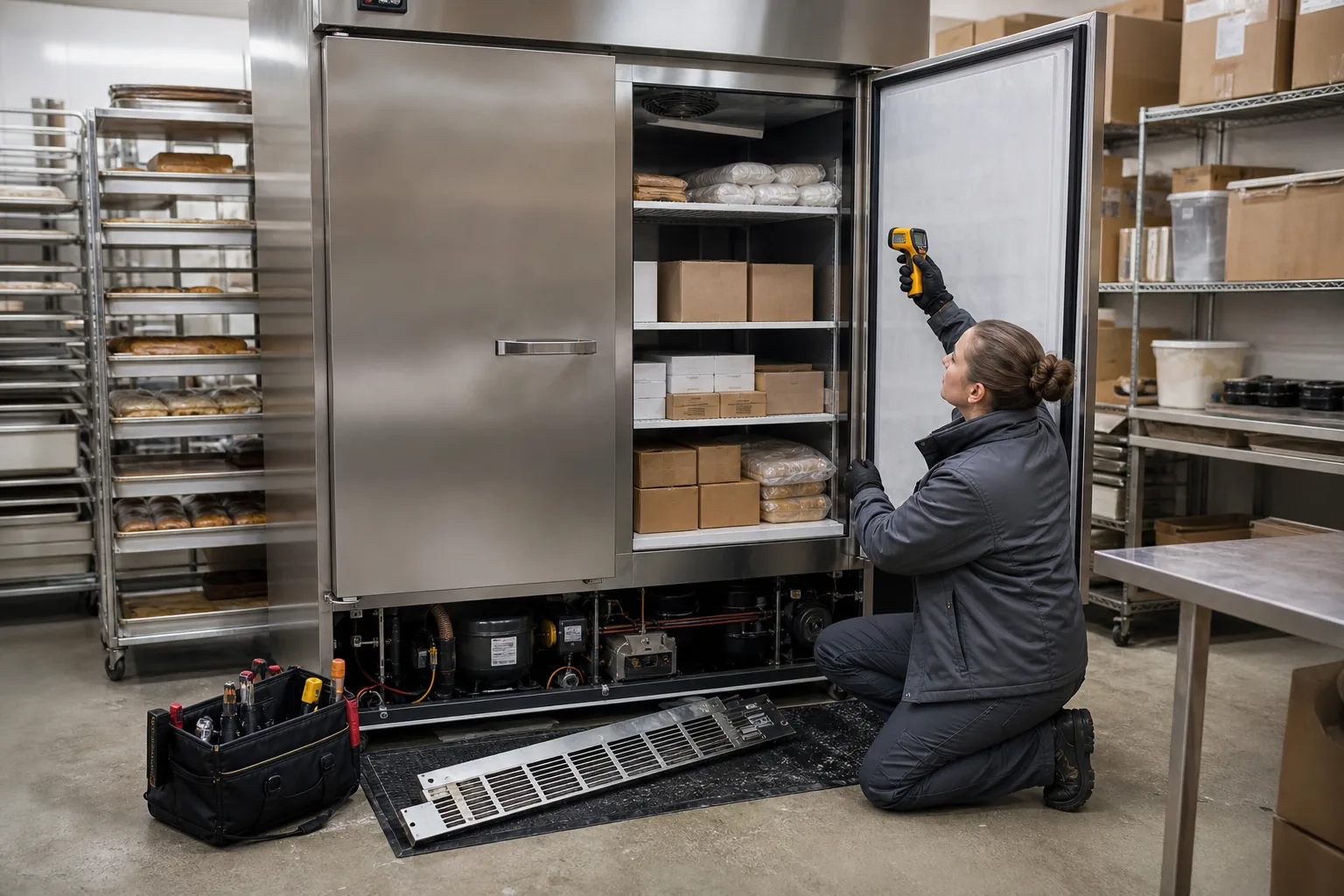
A reach-in freezer combines a low-temperature refrigeration system and defrost controls within one upright cabinet. Door openings and gasket leakage add moisture quickly, while fan or defrost faults can hide behind an apparently normal controller. Frost shape, cabinet temperature, and the sequence around defrost provide stronger evidence than run time alone.
Identify the exact equipment first
- Record product and air temperatures before resetting alarms
- Photograph frost on the evaporator cover and door frame
- Check every door closer and gasket
- Note fan operation before and after defrost
- Record compressor run pattern and controller messages
- Photograph the complete manufacturer model and serial plate, including every suffix
Protect people, property, and stored product first. Shut affected equipment down for gas odor, smoke, arcing, exposed wiring, active water near electrical parts, unsafe temperatures, or repeated protection trips. Move temperature-sensitive product according to the business's food-safety plan and keep time-and-temperature records.
Systems that shape the diagnosis
Evaporator frost
Defrost heat, termination, fan delay, drainage, or infiltration can cover the coil and stop airflow. Ice removal must be followed by root-cause testing.
Door and hinge wear
Heavy commercial doors can sag or fail to self-close. Humid air entering one section creates localized ice and longer cycles.
Control probes
A probe can report the wrong temperature or terminate defrost incorrectly. Compare controller data with independent measurements and physical coil condition.
Low-temperature components
Condenser airflow, compressor operation, pressure controls, refrigerant flow, and electrical load determine pull-down after airflow is restored.
What the diagnosis should prove
Observe temperature and fan behavior through a complete operating and defrost sequence. Inspect door infiltration, drainage, and condenser condition. If the coil is clear but pull-down remains weak, measured refrigeration and electrical tests can evaluate capacity without assuming low charge.
Downtime, product, and operating context
Frozen inventory can appear solid while surface or air temperatures rise. Follow the facility's product-safety procedure and record alarm duration. Do not use knives or heat guns to clear ice, and do not keep resetting a high-temperature alarm that returns.
Repair scope and replacement decisions
A cabinet with sound doors and insulation may justify fan, defrost, control, or compressor repair. Extensive corrosion, repeated coil leaks, obsolete refrigerant, damaged hinges, and failed insulation can shift the decision toward replacement. Include downtime and available temporary storage.
Frequently asked questions
Why does frost return a few days after it is cleared?
The defrost, drainage, fan-delay, or door-infiltration cause remains. Manual thawing restores airflow temporarily but does not repair the system.
Can a bad door closer cause a high-temperature alarm?
Yes. Repeated incomplete closing adds heat and moisture, increases frost, and can overwhelm cabinet capacity.
Why is the freezer warm after a power outage?
The system may still be pulling down, but controls, phase or voltage, fans, compressor starting, and product load should be checked if recovery is abnormal.
What information should I send for commercial reach-in freezer service?
Send the complete model and serial tag, power or fuel type, exact symptom, any code, measured temperatures when relevant, business hours, and clear photos of the installation and service access. Do not include customer or employee personal information in equipment photos.