
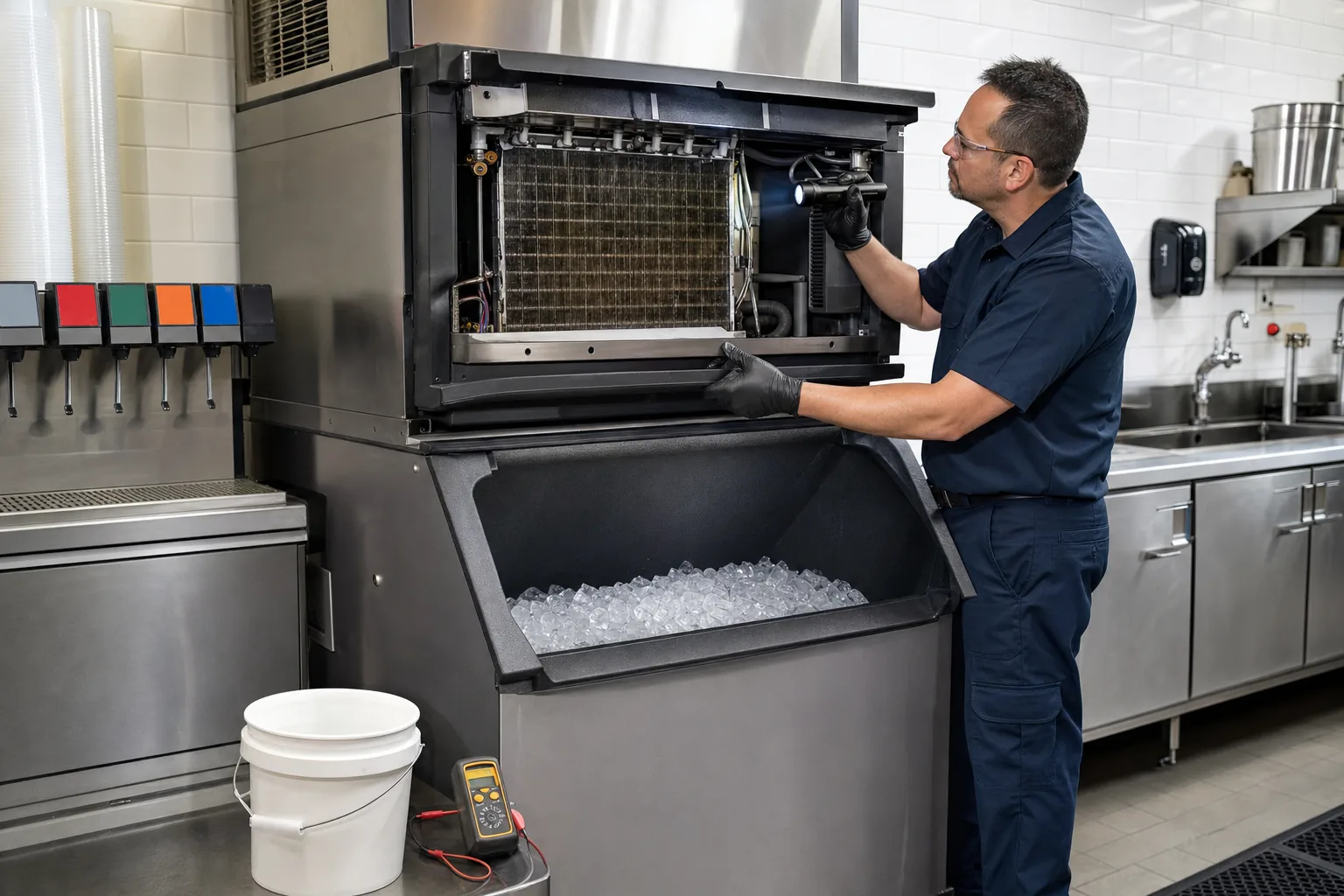
A modular commercial ice machine repeats a timed sequence: fill, circulate water, freeze, sense ice formation, harvest, and refill. Cube shape and the stage where production stops are highly diagnostic. Water quality and sanitation affect performance, but cleaning cannot repair a failed valve, sensor, pump, control, or refrigeration component.
Identify the exact equipment first
- Photograph cube size, bridge thickness, and evaporator pattern
- Record freeze and harvest times
- Check incoming water flow and filter condition
- Note pump, fan, and compressor operation
- Save bin-control and board status information before resetting
- Photograph the complete manufacturer model and serial plate, including every suffix
Protect people, property, and stored product first. Shut affected equipment down for gas odor, smoke, arcing, exposed wiring, active water near electrical parts, unsafe temperatures, or repeated protection trips. Move temperature-sensitive product according to the business's food-safety plan and keep time-and-temperature records.
Systems that shape the diagnosis
Water distribution
Restricted filters, inlet valves, pumps, scale, spray tubes, and low flow produce thin, incomplete, or irregular ice.
Freeze cycle
Airflow, water temperature, refrigerant performance, sensors, and controls determine how evenly the evaporator freezes and how long the cycle takes.
Harvest
Valves, heaters on applicable designs, sensors, board timing, and evaporator condition affect release. Ice that will not drop is different from a machine that never freezes.
Bin and sanitation conditions
Bin controls stop production when satisfied, while scale and biofilm can affect water paths. Cleaning and repair scopes should be documented separately.
What the diagnosis should prove
Observe at least one complete cycle when possible and record freeze time, ice pattern, harvest initiation, release, refill, and shutdown. Compare water and ambient conditions with manufacturer specifications. Refrigeration measurements make sense only in the context of the cycle stage and evaporator pattern.
Downtime, product, and operating context
Discard ice exposed during service according to the establishment's sanitation policy. Keep scoops, bins, and food-contact surfaces protected from tools and chemicals. If production is critical, document daily demand and available backup ice so repair timing reflects operations.
Repair scope and replacement decisions
Valves, pumps, controls, sensors, fans, and many water-distribution repairs are contained. Evaporator delamination, recurring refrigerant leaks, severe corrosion, or obsolete controls can favor replacement of the head. Bin condition and capacity should be considered separately from the ice-making unit.
Frequently asked questions
Why are the ice cubes small or hollow?
Low water flow, scale, distribution problems, warm conditions, short freeze cycles, or refrigeration capacity can reduce cube formation. The evaporator pattern helps separate them.
Why does the machine make ice but not drop it?
Harvest initiation, valves, heat transfer, sensors, control timing, water conditions, or evaporator surface problems may prevent release.
Will cleaning fix an ice machine that makes no ice?
Cleaning may restore restricted water flow or heat transfer, but it will not repair failed electrical, water, control, or refrigeration components.
What information should I send for commercial ice machine service?
Send the complete model and serial tag, power or fuel type, exact symptom, any code, measured temperatures when relevant, business hours, and clear photos of the installation and service access. Do not include customer or employee personal information in equipment photos.