
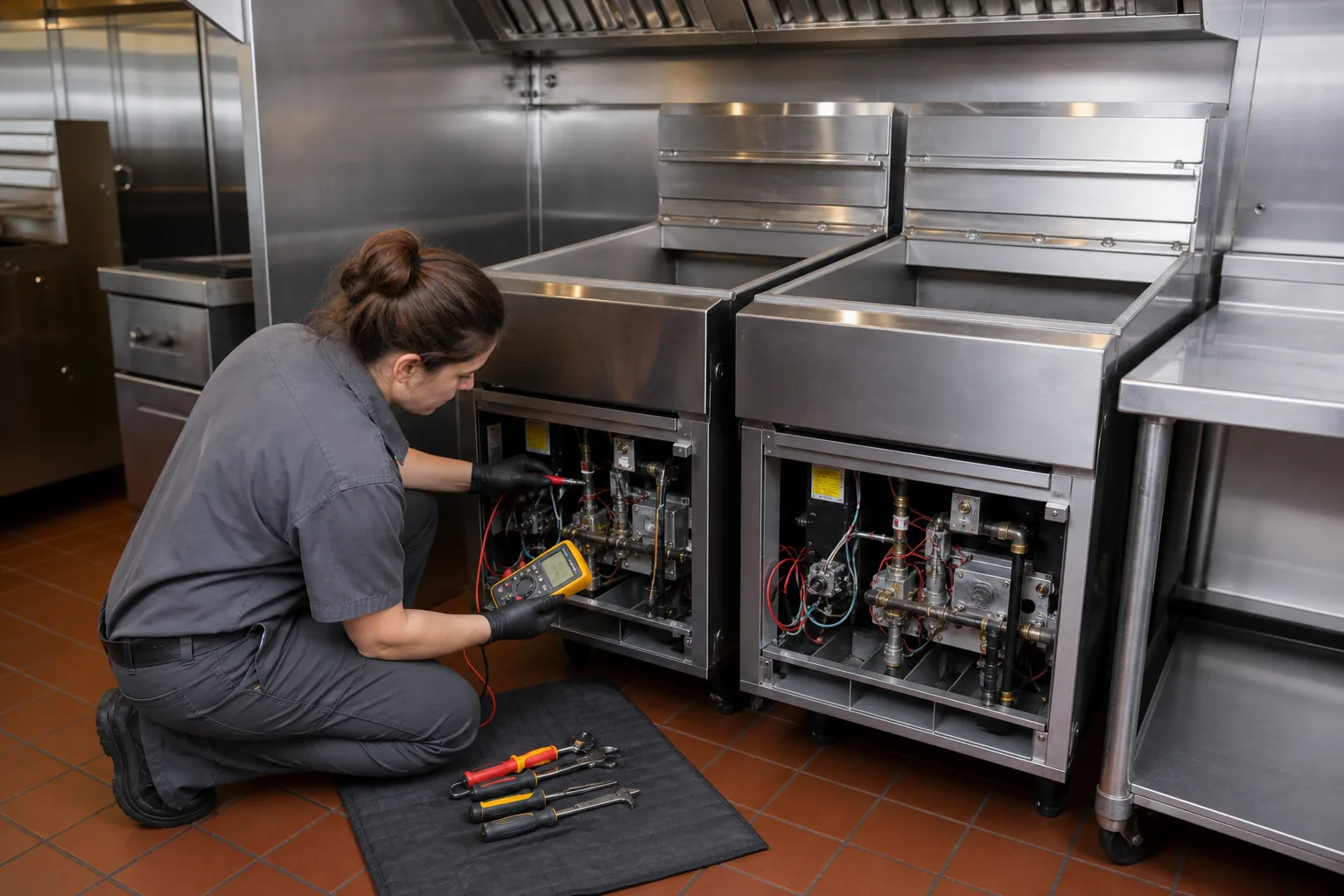
Commercial fryers combine high energy, hot oil, ignition or electric heat, temperature control, and independent high-limit protection. A fryer that will not heat and one that overheats require opposite safety responses. Oil condition and filtration matter operationally, but electrical and gas faults need measured diagnosis with the vat cool and safely prepared.
Identify the exact equipment first
- Identify gas or electric heat and the affected vat
- Record pilot, ignition, element, or contactor behavior
- Note thermostat response and high-limit trips
- Inspect filtration and drain-valve status after cooldown
- Document whether recovery fails only under production load
- Photograph the complete manufacturer model and serial plate, including every suffix
Protect people, property, and stored product first. Shut affected equipment down for gas odor, smoke, arcing, exposed wiring, active water near electrical parts, unsafe temperatures, or repeated protection trips. Move temperature-sensitive product according to the business's food-safety plan and keep time-and-temperature records.
Systems that shape the diagnosis
Ignition or electric heat
Pilots, igniters, gas valves, burners, elements, contactors, and supply determine whether the vat receives heat.
Temperature control
Mechanical thermostats, electronic probes, and controls cycle heat. Sensor location and oil circulation affect the reading.
High-limit safety
A trip may follow true overheating, poor oil level, sensor failure, control failure, or a damaged safety device. Repeated resetting is unsafe.
Filtration and recovery
Oil level, debris, return flow, burner condition, element condition, and production load influence recovery without replacing safety diagnosis.
What the diagnosis should prove
Cool and prepare the fryer according to safe service procedure, then test heat input, temperature sensing, control cycling, and high-limit operation. Compare actual oil temperature with the control. Gas combustion and live electrical testing require qualified service and correct ventilation.
Downtime, product, and operating context
Take the affected vat out of service for overheating, high-limit trips, gas odor, smoke, damaged controls, or oil leaks. Coordinate oil transfer and disposal before access. Never work around a full hot vat or use repeated resets to keep production running.
Repair scope and replacement decisions
Ignition components, elements, contactors, thermostats, probes, high limits, and filtration parts are common repairs. Vat leaks, severe corrosion, damaged manifolds, obsolete controls, or recurring overheating can justify replacement. New fryer input must match gas, electrical, and hood capacity.
Frequently asked questions
Why does the fryer high limit keep tripping?
Actual overheating, low oil, a control or probe fault, poor circulation, or a failed high limit may be involved. Do not keep resetting it.
Why is fryer recovery slow?
Burner or element output, supply, thermostat cycling, oil level, filtration, and production load affect recovery. Measure heat input before adjusting temperature.
Can a fryer be serviced with oil in it?
Some external checks may be possible, but internal heat and control access often requires a cool, safely drained or prepared vat. Follow equipment-specific procedure.
What information should I send for commercial fryer service?
Send the complete model and serial tag, power or fuel type, exact symptom, any code, measured temperatures when relevant, business hours, and clear photos of the installation and service access. Do not include customer or employee personal information in equipment photos.