
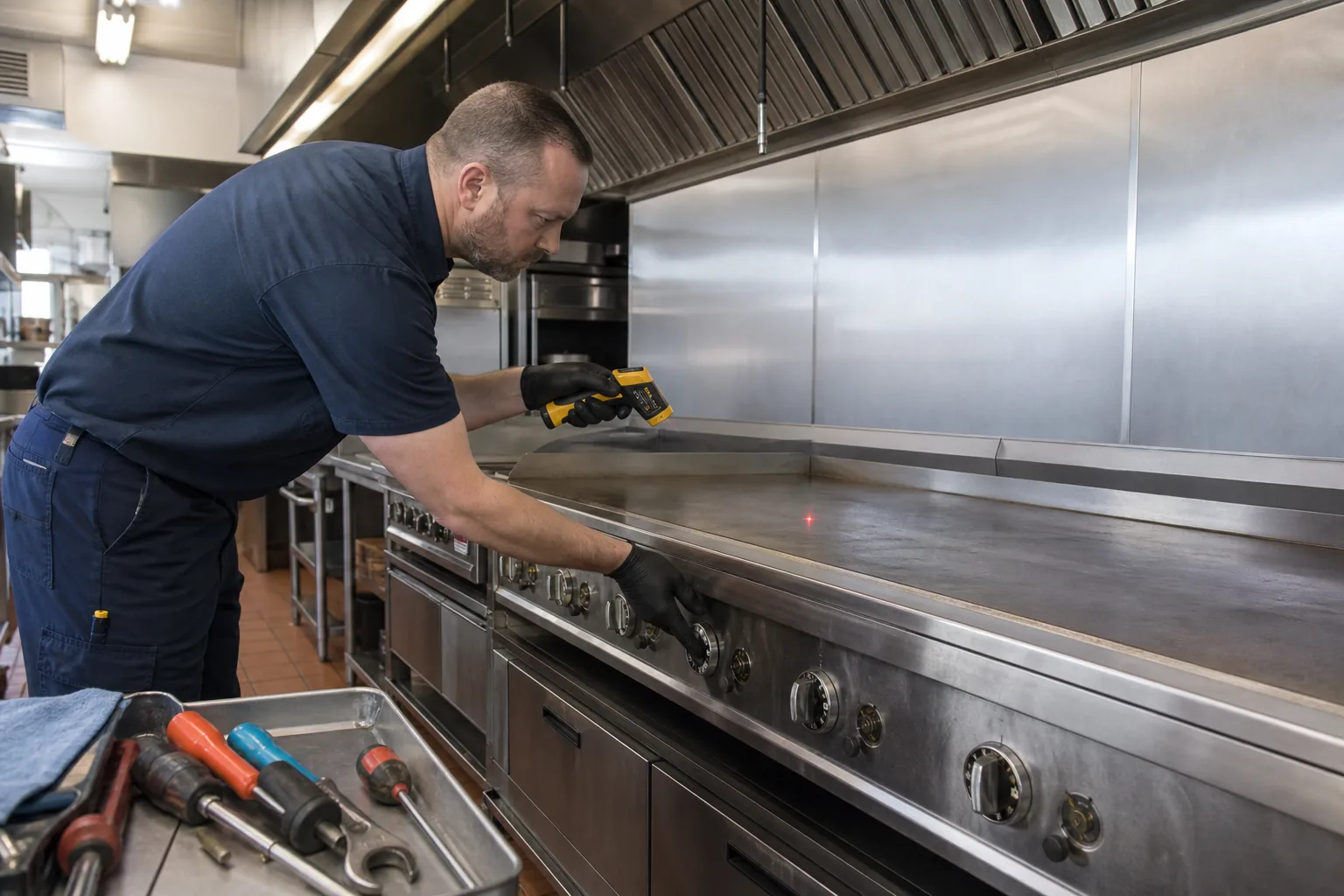
A commercial griddle must deliver even, repeatable surface temperature across independent control zones. One cold strip, slow recovery, or uncontrolled heat can involve burners or elements, thermostats, probes, valves, contactors, or plate condition. Surface mapping under a known setpoint is more useful than judging one location by touch.
Identify the exact equipment first
- Map surface temperature across every control zone
- Record warm-up and recovery times
- Identify gas or electric heat and power rating
- Note pilot, burner, element, or contactor operation
- Inspect grease management and ventilation after the plate is cool
- Photograph the complete manufacturer model and serial plate, including every suffix
Protect people, property, and stored product first. Shut affected equipment down for gas odor, smoke, arcing, exposed wiring, active water near electrical parts, unsafe temperatures, or repeated protection trips. Move temperature-sensitive product according to the business's food-safety plan and keep time-and-temperature records.
Systems that shape the diagnosis
Zone heat input
Gas burners and pilots or electric elements and contactors can fail by zone, leaving a repeatable cold band.
Thermostat and probe
Probe contact, capillary controls, electronic sensors, and calibration determine cycling. A failed control may overheat as well as underheat.
Plate condition
Warping, heavy carbon, and damaged mounting can change heat transfer. Cleaning cannot correct a failed heat source, but surface condition affects measurements.
Gas, power, and ventilation
Supply conditions and hood airflow influence performance across all zones. Shared weakness should be measured before several controls are replaced.
What the diagnosis should prove
Use a repeatable temperature map across the plate during warm-up, cycling, and recovery. Compare each control position with its heat source and sensor. For gas equipment, verify combustion and pressure safely; for electric equipment, verify current and contactor operation with qualified tools.
Downtime, product, and operating context
The griddle must be empty, scraped, cool enough for safe access, and out of production during testing. Describe whether the fault appears at breakfast rush, after long idle periods, or continuously. That timing helps distinguish capacity from intermittent control behavior.
Repair scope and replacement decisions
Thermostats, probes, valves, pilots, burners, elements, contactors, and wiring are often repairable. A severely warped or cracked plate, deteriorated frame, unsafe manifold, or obsolete control can make replacement more practical. Match new equipment to hood and utility capacity.
Frequently asked questions
Why is one side of the griddle colder?
That zone may have a burner, element, thermostat, probe, valve, contactor, or airflow issue. A temperature map shows whether the boundary follows a control zone.
Can a commercial griddle be calibrated?
Some controls can be adjusted after heat input and sensor operation are confirmed. Calibration cannot repair an intermittent valve or failed element.
Why does temperature drop during the rush?
Load, recovery capacity, supply, dirty burners, weak elements, control cycling, and operator technique can contribute. Measure recovery under representative conditions.
What information should I send for commercial flat-top griddle service?
Send the complete model and serial tag, power or fuel type, exact symptom, any code, measured temperatures when relevant, business hours, and clear photos of the installation and service access. Do not include customer or employee personal information in equipment photos.