
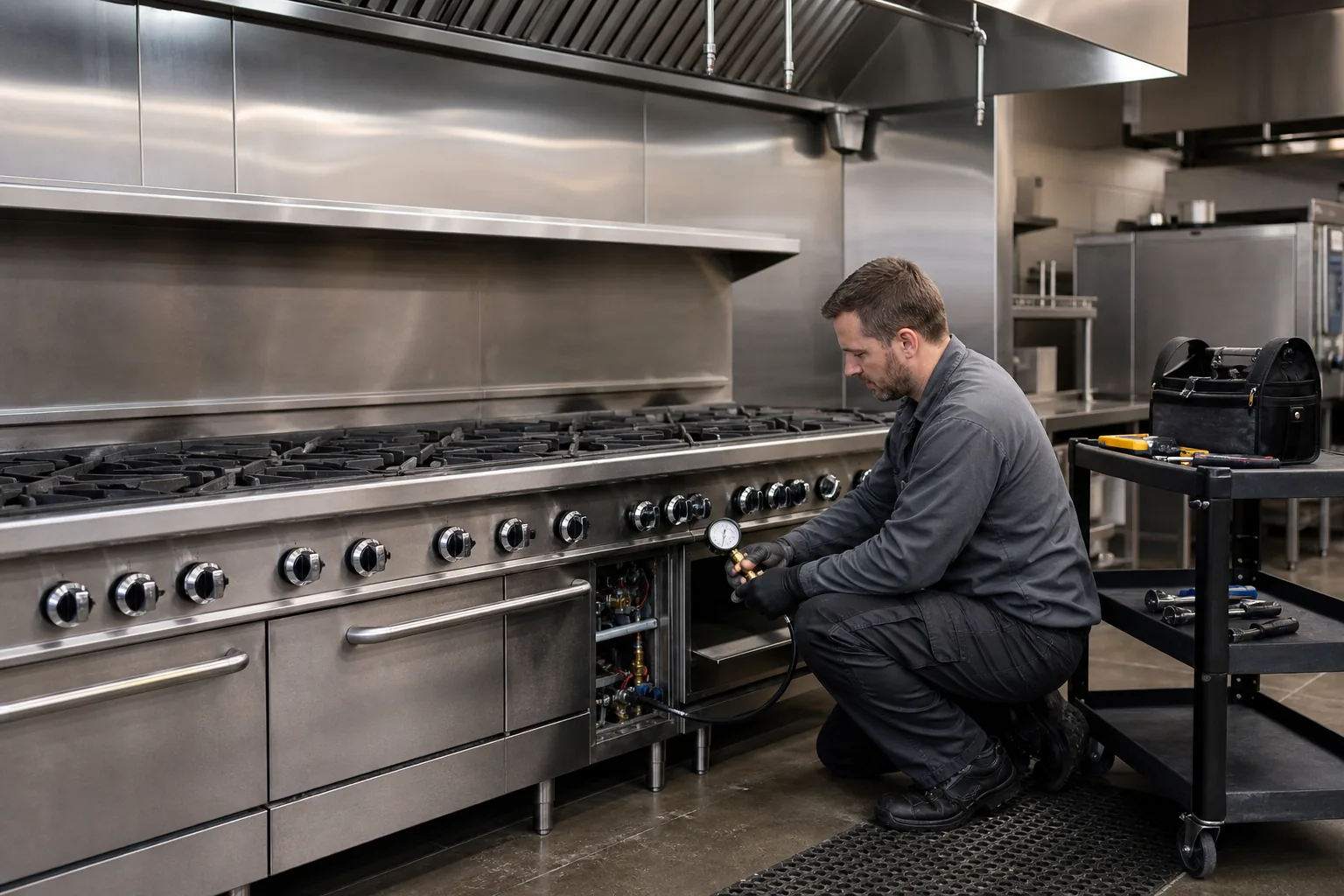
Commercial ranges are built for continuous production, with open burners or sealed tops, pilots or electronic ignition, heavy valves, and one or more base ovens. Grease and heat are part of the environment, but they should not be used as a generic explanation. The symptom must be tied to one burner, one oven, or a shared supply condition.
Identify the exact equipment first
- Identify which burners and ovens are affected
- Observe flame color, shape, lift, and stability
- Note pilot or electronic ignition behavior
- Record whether performance changes as more burners operate
- Inspect hood operation and the range installation without moving it
- Photograph the complete manufacturer model and serial plate, including every suffix
Protect people, property, and stored product first. Shut affected equipment down for gas odor, smoke, arcing, exposed wiring, active water near electrical parts, unsafe temperatures, or repeated protection trips. Move temperature-sensitive product according to the business's food-safety plan and keep time-and-temperature records.
Systems that shape the diagnosis
Burners and pilots
Ports, orifices, pilots, thermocouples, flame sensing, and alignment affect ignition and stable operation. Cleaning is only one part of evaluation.
Valves and regulation
One weak burner suggests a local path, while low output across the line can involve pressure, regulator, manifold, or supply conditions.
Base oven heat
Pilots, igniters, valves, burners, thermostats, and door sealing determine oven temperature and recovery.
Ventilation interaction
Hood airflow and building pressure can disturb pilots and flame. The appliance and ventilation system should be observed together when symptoms follow hood operation.
What the diagnosis should prove
Map burner and oven performance under controlled load, then measure gas pressure and safety operation with qualified instruments. Inspect flame and ignition timing before adjustment. Any delayed ignition, rollout, gas odor, or unstable flame requires shutdown and correction before the range returns to service.
Downtime, product, and operating context
Range downtime changes menu capacity and line staffing. Clear the cook line, let equipment cool, and provide access to shutoffs and the hood controls. Do not test around active cooking or cover a safety problem by lighting pilots manually throughout service.
Repair scope and replacement decisions
Burners, pilots, valves, thermostats, igniters, door parts, and many controls are serviceable. Cracked castings, severe corrosion, unsafe manifolds, obsolete valves, or repeated oven damage can favor replacement. Confirm dimensions, gas input, hood capacity, and utility connections before changing equipment.
Frequently asked questions
Why are all commercial range flames weak?
A shared regulator, manifold, supply, building load, or installation condition becomes more likely than several simultaneous burner faults.
Can the exhaust hood blow out pilots?
Excessive makeup-air imbalance or drafts can disturb pilots and flames. Ventilation and appliance conditions should be tested together.
Is a yellow flame always a dirty burner?
No. Burner condition, air mixture, pressure, orifices, fuel type, and ventilation can affect flame. Stop for soot, rollout, or unstable combustion.
What information should I send for commercial range service?
Send the complete model and serial tag, power or fuel type, exact symptom, any code, measured temperatures when relevant, business hours, and clear photos of the installation and service access. Do not include customer or employee personal information in equipment photos.