
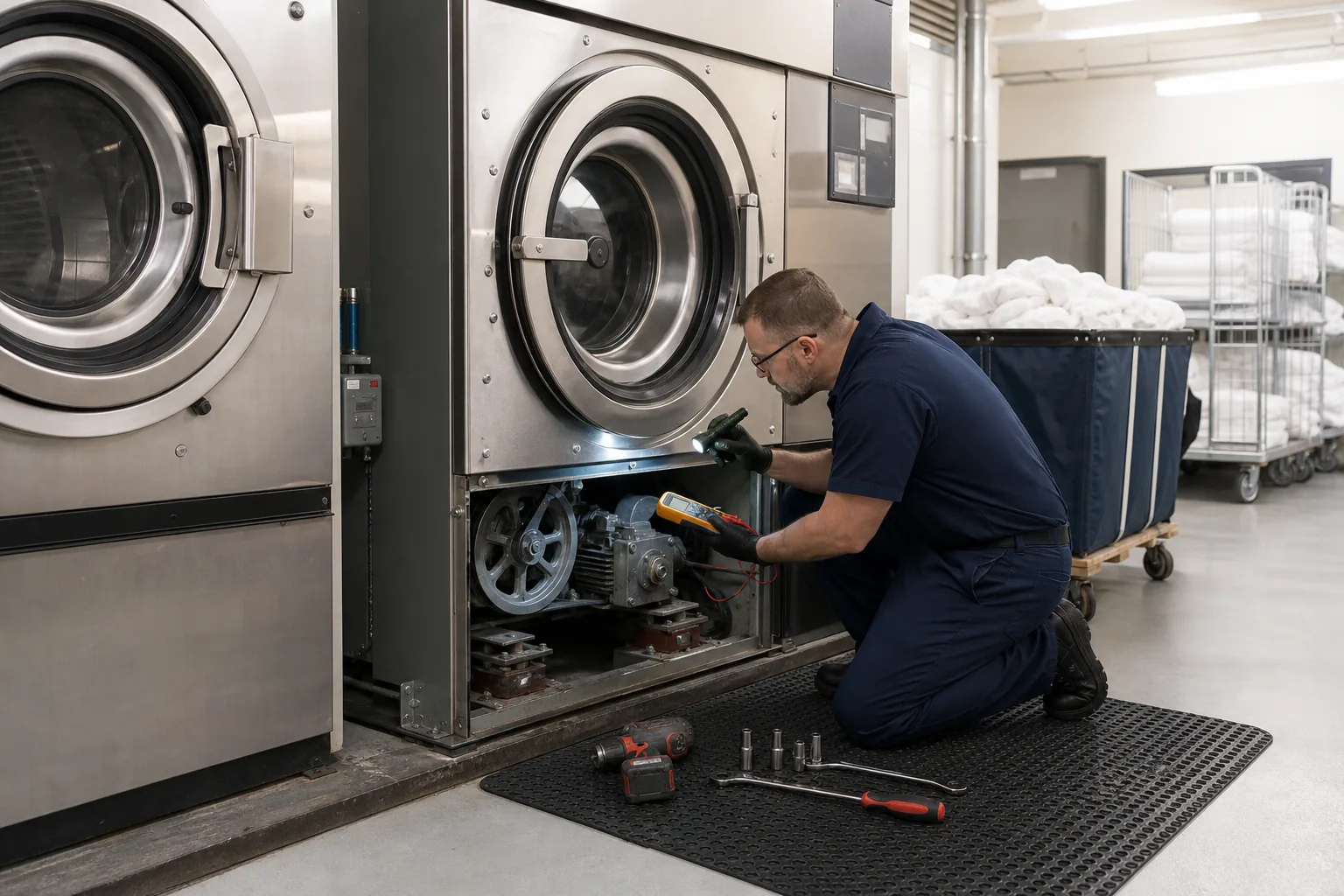
Commercial washer-extractors combine high-capacity water handling, programmed chemistry, door safety, heavy drives, and high-speed extraction. A load left wet may reflect drain time, imbalance, door locking, motor feedback, or control logic rather than a failed drive alone. Machine anchoring and floor condition are part of the diagnostic system.
Identify the exact equipment first
- Record the program step where the cycle stops
- Check whether water drains before extract
- Note load type, weight, and imbalance behavior
- Inspect anchoring, foundation, and visible movement
- Save complete error codes and door-lock behavior
- Photograph the complete manufacturer model and serial plate, including every suffix
Protect people, property, and stored product first. Shut affected equipment down for gas odor, smoke, arcing, exposed wiring, active water near electrical parts, unsafe temperatures, or repeated protection trips. Move temperature-sensitive product according to the business's food-safety plan and keep time-and-temperature records.
Systems that shape the diagnosis
Drain and level sensing
Pumps or valves, hoses, obstructions, pressure systems, and controls determine whether the machine confirms an empty tub before extract.
Door safety
Locks, switches, alignment, wiring, and control confirmation prevent high-speed operation when the door state is uncertain.
Drive and feedback
Belts, motors, inverters, bearings, speed sensors, and controls can limit rotation or stop under load.
Anchoring and suspension
Foundation, mounting, shock systems, and load distribution affect vibration. Repeated violent movement can damage hoses and wiring.
What the diagnosis should prove
Follow the cycle from fill through wash, drain, distribution, and extract. Confirm water level and door lock before condemning the drive. Measure inverter or motor behavior under a known load and inspect anchoring and mechanical play with the machine safely isolated.
Downtime, product, and operating context
Provide access between production batches and identify linen type, typical load weight, chemical system, and the last completed step. Stop a machine that walks, strikes the frame, leaks near power, smells electrical, or cannot keep the door safely locked.
Repair scope and replacement decisions
Drain components, locks, belts, controls, inverters, sensors, and some bearings can be repairable. Cracked frames, tub damage, severe bearing failure, obsolete drives, or inadequate foundation can require major work or replacement. Capacity and matching dryer throughput matter to the business decision.
Frequently asked questions
Why will the washer not enter high-speed extract?
The machine may not confirm drain, door lock, balance, speed feedback, or safe drive conditions. The preceding step often reveals the cause.
Can an unbalanced load cause repeated faults?
Yes, but recurring imbalance with normal loads can indicate anchoring, suspension, bearing, drive, or control problems.
Is vibration always a machine problem?
No. Foundation, anchoring, floor condition, load mix, and installation can contribute, so inspect the machine and site together.
What information should I send for commercial washer-extractor service?
Send the complete model and serial tag, power or fuel type, exact symptom, any code, measured temperatures when relevant, business hours, and clear photos of the installation and service access. Do not include customer or employee personal information in equipment photos.