
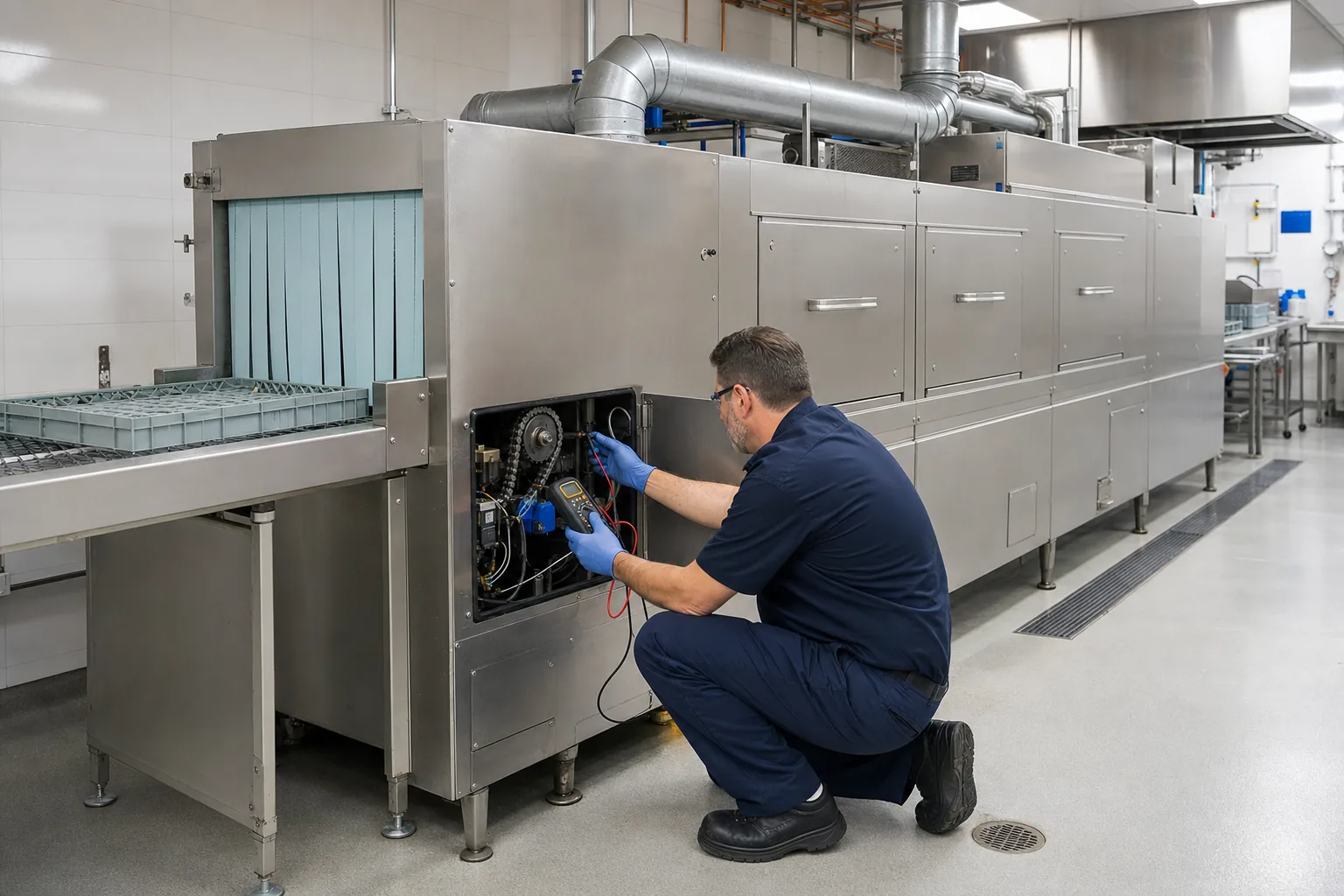
A conveyor dishwasher is a coordinated production line with rack sensing, drive components, one or more wash tanks, pumps, heaters, final rinse, doors, exhaust, and chemical systems. A rack that stops at the entrance can have a different cause from one that stalls under load or completes the tunnel without proper sanitation.
Identify the exact equipment first
- Identify the exact zone where racks stop or results decline
- Record conveyor speed and drive behavior
- Measure each tank and final-rinse temperature
- Inspect curtains, strainers, arms, jets, and rack sensors
- Note exhaust, leaks, and chemical-system status
- Photograph the complete manufacturer model and serial plate, including every suffix
Protect people, property, and stored product first. Shut affected equipment down for gas odor, smoke, arcing, exposed wiring, active water near electrical parts, unsafe temperatures, or repeated protection trips. Move temperature-sensitive product according to the business's food-safety plan and keep time-and-temperature records.
Systems that shape the diagnosis
Conveyor drive
Motors, gearboxes, chains, sprockets, clutches, switches, sensors, and obstructions control rack movement and overload protection.
Wash zones
Tank level, pump performance, arms, jets, strainers, heat, and curtains determine mechanical cleaning by section.
Final rinse and sanitation
Booster capacity, valves, pressure, temperature, sensors, and timing determine final rinse conditions.
Exhaust and controls
Ventilation, doors, interlocks, emergency stops, and control communication can interrupt operation or release heat and steam into the room.
What the diagnosis should prove
Follow an empty and representative rack through the full conveyor path. Record drive load, tank levels, pump sound, temperatures, spray patterns, final rinse, and shutdown point. Test safety devices and interlocks without bypassing them. Separate chemical service from machine electrical and mechanical scope.
Downtime, product, and operating context
Large dish rooms need an alternate warewashing plan during downtime. Clear both feed and exit tables, identify lockout points, and coordinate with facilities staff for exhaust and booster systems. Keep staff away from moving components during testing.
Repair scope and replacement decisions
Sensors, switches, chains, sprockets, motors, pumps, heaters, valves, controls, and spray components are often serviceable. Severe tank corrosion, repeated gearbox failure, obsolete controls, or capacity mismatch can support replacement. Utility, ventilation, floor drain, and room-layout costs must be included.
Frequently asked questions
Why does the conveyor stop when a rack enters?
Drive overload, chain or sprocket wear, a jam, rack sensor, clutch, motor, gearbox, or control condition may appear only under load.
Can one wash zone fail while the conveyor keeps moving?
Yes. A pump, heater, level control, spray arm, or valve can fail in one zone while the drive continues, producing poor results without a complete stop.
Why is the final rinse temperature low during peak use?
Booster recovery, incoming water, flow, pressure, valve timing, sensors, and conveyor demand can exceed or interrupt the designed capacity.
What information should I send for commercial conveyor dishwasher service?
Send the complete model and serial tag, power or fuel type, exact symptom, any code, measured temperatures when relevant, business hours, and clear photos of the installation and service access. Do not include customer or employee personal information in equipment photos.