
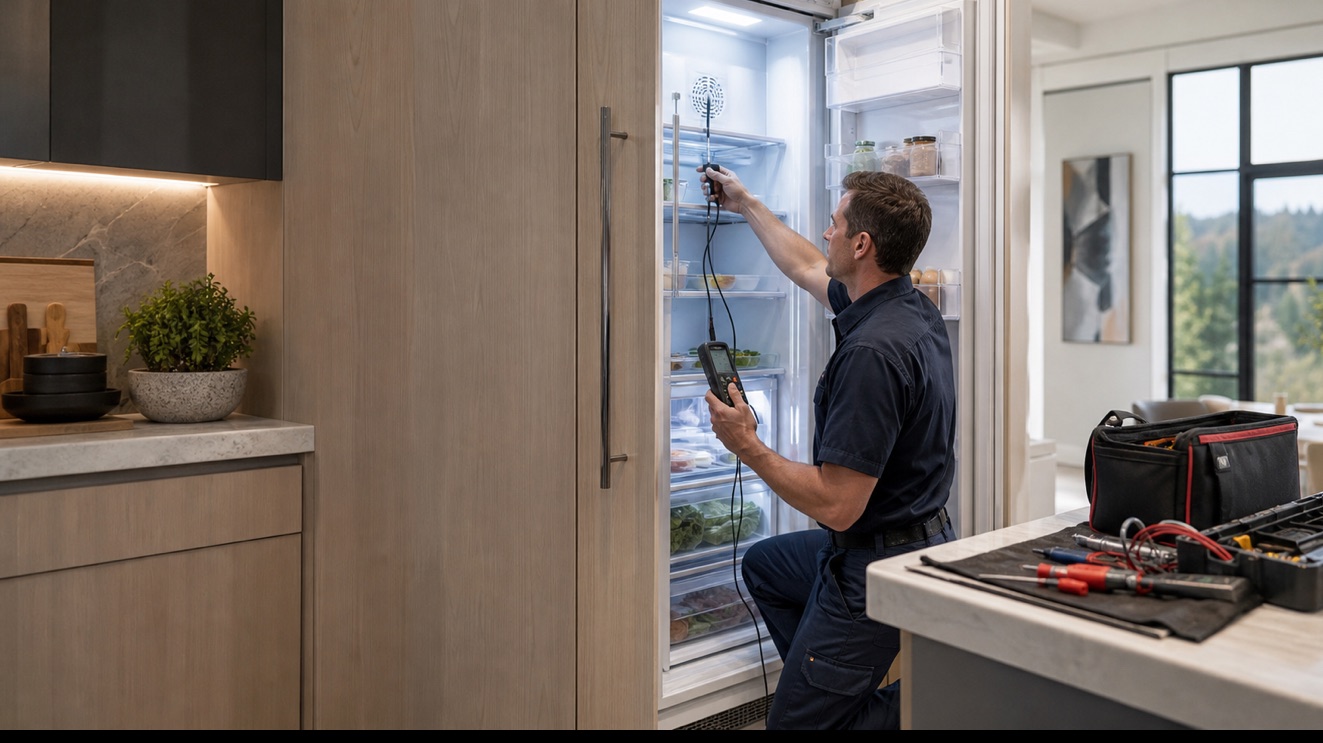
Monogram built-in refrigerators, integrated columns, and freestanding configurations do not all share the same cooling layout. A useful diagnosis starts with the complete model number and a map of which compartment is warm, rather than assuming one common part is responsible.
Safe checks you can make first
- Measure each compartment instead of relying only on the setpoint
- Confirm doors and drawers clear panels and interior packages
- Keep air outlets and returns uncovered
- Look for a solid frost area or unusual condensation
- Listen for fan changes when doors open and close
- Note alarms, recent power loss, or cabinet renovation
Stop for gas odor, smoke, damaged wiring, active leaks near electrical parts, or repeated breaker trips. Avoid internal gas, refrigerant, or live-voltage work and arrange professional service.
Common causes behind the symptom
Cold air is not circulating
A fan, damper, frost blockage, or overloaded air return can isolate one section from otherwise available cooling.
The defrost or drain system is interrupted
Ice on the evaporator or water refreezing below it can change airflow and temperature over several days.
Built-in heat rejection is restricted
A dirty condenser, weak fan, or limited grille path keeps heat around the machine and increases operating load.
Door sealing admits room air
Panel alignment, hinge wear, gasket condition, and drawer interference can introduce heat and humidity at one edge.
Sensor, control, or sealed-system output is abnormal
Electrical feedback and refrigeration capacity are tested after the simpler airflow and cabinet conditions are documented.
Columns and single cabinets show different patterns
In a column installation, the neighboring freezer may remain normal because it is a separate appliance. In a single cabinet, warm fresh food with a cold freezer often indicates an internal airflow problem. State exactly which doors and drawers are affected when booking.
A setpoint is a command, not a thermometer reading. Actual temperatures and the direction they are moving help distinguish a temporary door event from an active failure.
Repair planning includes panels and cabinetry
Integrated equipment may need panel protection, water-line access, floor protection, and model-specific removal steps. Diagnosis should begin in place whenever possible. The repair-versus-replace discussion should include installation impact, component availability, cabinet condition, and the confirmed failure scope.
Frequently asked questions
Why is one Monogram column warm while the other is cold?
Columns can operate independently, so the normal unit may not share the failed fan, sensor, control, or refrigeration circuit.
Can a door panel affect cooling?
Yes. Panel alignment or interference can prevent even gasket contact, allowing humid room air into the cabinet.
Should I lower the setpoint when temperatures rise?
Record the actual temperature first. A lower setting will not restore failed airflow or refrigeration and can obscure how the problem developed.
What makes built-in refrigerator service different?
Access, ventilation, water and power connections, decorative panels, floor protection, and replacement fit all influence diagnosis and repair planning.
Ghost Appliance Repair is an independent service company and is not affiliated with or endorsed by Monogram or its manufacturer.