
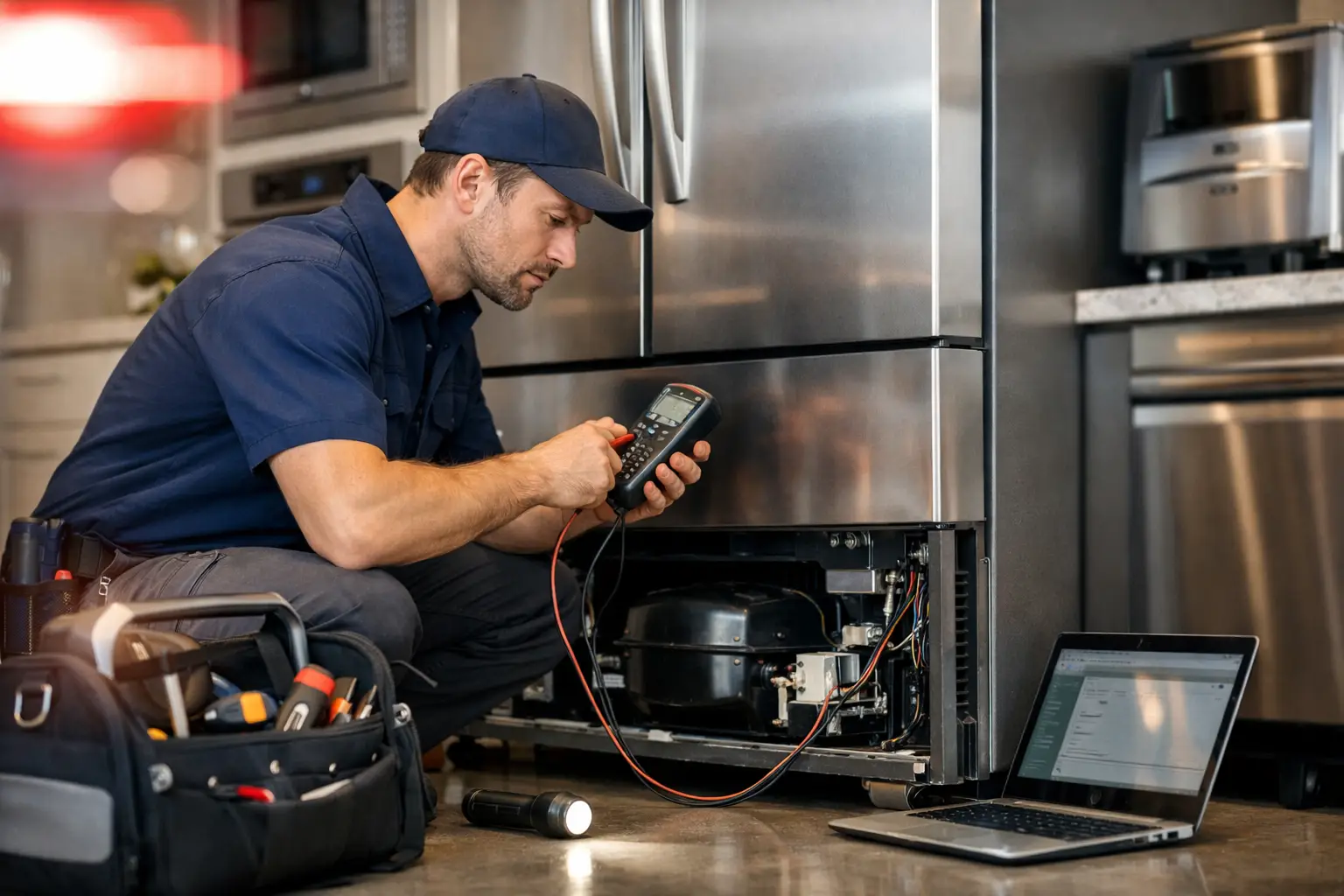
A warm refrigerator does not automatically mean the compressor has failed. Airflow, frost, a fan, a sensor, a door-seal problem, or an unstable control can produce a similar symptom. The pattern between the refrigerator and freezer compartments usually tells more than the sound of the compressor alone.
Safe checks you can make first
- Confirm that the temperature controls were not changed accidentally
- Make sure packages are not blocking the interior air vents
- Compare the refrigerator and freezer temperatures
- Look for heavy frost on the rear interior panel
- Check whether each door closes and seals evenly
- Record any alarm, service message, or error code
Stop for gas odor, smoke, damaged wiring, active leaks near electrical parts, or repeated breaker trips. Avoid internal gas, refrigerant, or live-voltage work and arrange professional service.
Common causes behind the symptom
Restricted cabinet airflow
A stopped evaporator fan, blocked return vent, failed damper, or dense food loading can keep cold air from reaching the fresh-food section even while the freezer remains cold.
Defrost system failure
A heater, sensor, wiring, or control fault can allow ice to cover the evaporator. Cooling may decline gradually as the remaining air passages close.
Condenser heat cannot escape
Dust, poor ventilation, or a failed condenser fan raises operating temperature. The refrigerator may run for long periods while both compartments slowly warm.
Incorrect temperature feedback
A thermistor or control problem can cause the system to cycle at the wrong time. Actual compartment readings are needed before a sensor is blamed.
Refrigeration-system problem
A compressor, refrigerant-flow, or sealed-system fault is considered when fans and controls operate but the evaporator does not develop a normal cooling pattern.
Use the temperature pattern to narrow the problem
A cold freezer with a warm refrigerator points first toward air circulation between compartments. If both sections are warm, condenser airflow, controls, power quality, or the refrigeration system move higher on the list. Heavy frost suggests a different path from a completely dry evaporator area.
Place food in safe storage and note the actual temperatures before changing settings repeatedly. That record helps the technician distinguish a progressive failure from a door that was left open or a temporary load of warm groceries.
Repair decisions depend on the installation
Fans, sensors, drains, valves, gaskets, and controls are often contained repairs. Compressor or sealed-system work requires a broader discussion about age, model support, cabinet condition, and replacement fit. Built-in refrigeration may justify a more complete evaluation because replacement can also affect panels, flooring, and surrounding cabinetry.
Frequently asked questions
Why is my freezer cold but the refrigerator warm?
The unit may still produce cold while a fan, damper, frost blockage, sensor, or air return prevents that cold air from reaching the fresh-food section.
Should I unplug a refrigerator that is not cooling?
Move food to safe storage first. Disconnect the unit for smoke, a burning smell, unsafe wiring, or active water near electrical parts. Otherwise, preserving the failed state can provide useful diagnostic evidence.
Can a dirty condenser cause warm temperatures?
Yes. Restricted heat rejection can increase run time and cabinet temperature, though cleaning will not correct a failed fan, control, or sealed system.
How quickly should a cooling problem be scheduled?
Treat rising food temperatures as time-sensitive. The service timing should be based on safe food storage, active leaks, unusual heat, and whether the temperature is continuing to climb.