
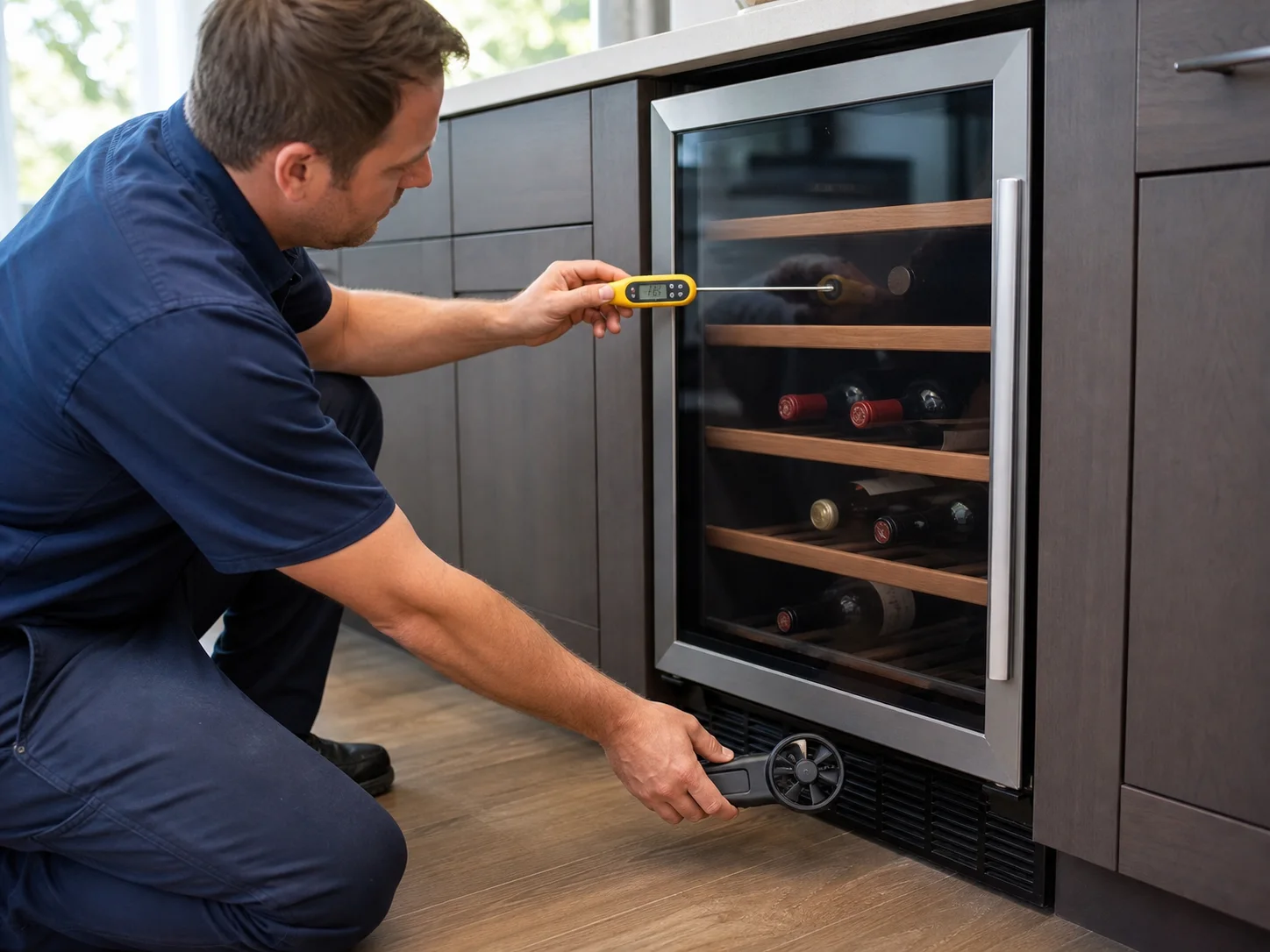
A Sub-Zero 424 may display a setpoint while actual bottle-zone temperature rises because airflow is weak, the door admits humidity, undercounter heat cannot escape, sensing is inaccurate, or refrigeration capacity is reduced. The built-in 424 and freestanding 424FS also deserve different installation-airflow observations.
Safe checks you can make first
- Measure every affected temperature zone instead of relying on the display or food texture
- Photograph frost, condensation, door contact, loading, and ventilation before thawing or cleaning
- Record fan sound, run time, alarms, recent service, and which zone changed first
- Keep doors closed and move food if measured temperatures cannot be maintained safely
- Photograph the complete Sub-Zero 424 and 424FS model and serial tag
- Preserve visible frost, water, messages, and temperature readings before resetting or cleaning
Stop for gas odor, smoke, damaged wiring, active leaks near electrical parts, or repeated breaker trips. Avoid internal gas, refrigerant, or live-voltage work and arrange professional service.
Common causes behind the symptom
Airflow is weak or blocked
A stopped fan, ice contact, obstructed return, loading pattern, or hidden frost can leave part of Sub-Zero 424 and 424FS warm while another area remains cold.
Frost covers the evaporator
A heater, sensor, wiring, drain, or control condition can allow ice to reduce circulation. The original frost shape is useful evidence.
A door or drawer admits humidity
Gasket contact, hinge or rail position, panel load, and stored items can add heat and moisture. Edge frost differs from a uniform refrigeration loss.
Temperature feedback or control is inaccurate
Sensor response, settings, relays, wiring, and control commands must be compared with actual Sub-Zero 424 and 424FS cycling.
Heat rejection or refrigeration capacity is reduced
Condenser airflow, fan operation, compressor electrical load, and the evaporator pattern are tested before a major refrigeration repair is proposed.
What the symptom pattern tells us
A uniform rise across the cabinet differs from warm shelves near a blocked air path. Condensation or frost along one edge supports sealing or humidity load. Long run time with hot toe-kick discharge points toward heat rejection, while short cycling changes the control and electrical path.
How professional diagnosis narrows the cause
Service compares zone temperatures, fan output, frost, door geometry, sensors, controls, condenser airflow, electrical load, and the refrigeration pattern on Sub-Zero 424 and 424FS. The checks follow the observed pattern rather than appliance age alone.
Likely repair scope
Possible repair categories include a fan, defrost component, drain correction, gasket or hinge work, sensor, control, condenser airflow, starting component, compressor, or sealed refrigeration work. The evidence determines which category is justified.
Model boundary and identification
This guide is specific to 424 and 424FS wine storage. Bottle-zone targets, shelving airflow, glass-door conditions, and undercounter ventilation differ from full-size refrigerator diagnosis.
Photograph the complete Sub-Zero 424 and 424FS model and serial tag because production revisions can change controls, wiring, water components, access, and compatible replacement parts.
Frequently asked questions
What should I record before service for Sub-Zero 424 and 424FS?
Record the exact operating stage, temperatures where relevant, error messages, sounds, recent changes, and clear photos of the original frost, water, door, reservoir, mold, or installation condition.
Should I order the most common Sub-Zero 424 and 424FS part first?
No. The same visible symptom can begin in temperature, airflow, water, mechanical, electrical, sensing, control, or installation conditions. The failed stage should be tested first.
Why is the full Sub-Zero 424 and 424FS tag needed?
Model suffixes and serial generations can change components, wiring, controls, doors, water paths, and service procedures without a major change in exterior appearance.
When should the appliance remain off?
Move temperature-sensitive food when safe storage cannot be maintained. Stop use for smoke, burning odor, damaged wiring, repeated breaker trips, or water near electrical components. Do not chip frost with tools or apply uncontrolled heat.
Ghost Appliance Repair is an independent service company and is not affiliated with or endorsed by Sub-Zero or its manufacturer.