
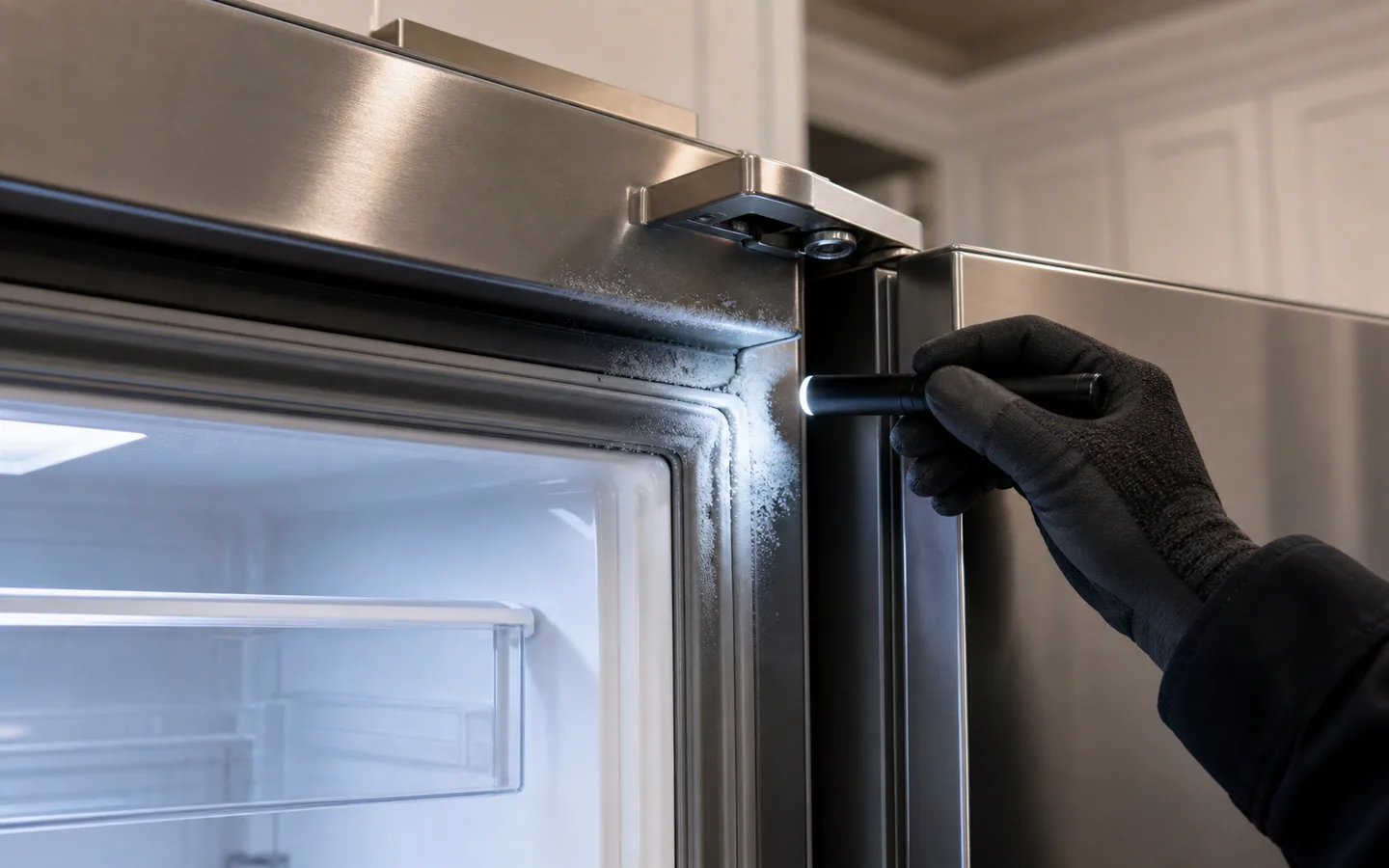
Moisture location matters. Condensation around a door edge points toward a different set of conditions than frost on a rear panel or ice beneath a drawer. Built-in panels and hinges can also change how evenly the door meets the cabinet, so the entire opening should be observed before a gasket is ordered.
Safe checks you can make first
- Photograph exactly where frost or water first appears
- Inspect the visible gasket for folds, gaps, or debris
- Confirm drawers and shelves are not preventing closure
- Note recent humid weather or long door openings
- Check whether one compartment is warmer than its setpoint
- Do not scrape liner frost with sharp tools
Stop for gas odor, smoke, damaged wiring, active leaks near electrical parts, or repeated breaker trips. Avoid internal gas, refrigerant, or live-voltage work and arrange professional service.
Common causes behind the symptom
Door or drawer is not sealing evenly
A misaligned panel, hinge condition, package interference, or distorted gasket can draw humid room air into one area of the cabinet.
High humidity is entering during use
Frequent openings, warm uncovered food, and humid indoor air can create temporary moisture, especially near door edges.
Defrost water is not draining
A restricted drain or drain-heating problem can allow water to freeze beneath an evaporator area or collect under drawers.
Evaporator frost is blocking airflow
A defrost heater, sensor, wiring, or control fault can build a dense frost layer that eventually changes compartment temperature.
Cabinet heat or sealing system is not operating normally
Model-specific heaters, mullion conditions, insulation, or control behavior may allow exterior condensation even when the gasket appears intact.
Map moisture before cleaning it away
A thin film after repeated door openings may resolve when humidity drops. Repeating ice in the same corner, a wet cabinet base, or a solid frost panel is stronger evidence of a mechanical condition. Record whether the moisture appears while the door is closed or only after use.
Check closure from several angles because a decorative panel can look aligned while the gasket misses the cabinet at one corner. Do not bend hinges or add heat to the gasket without model-specific guidance.
Frost can be the cause and the consequence
Air leakage creates frost, but frost from a defrost failure can also prevent a door or drawer from closing. Diagnosis needs to identify the first condition rather than replacing the most visible part. Temperature, frost pattern, drain behavior, and door contact are evaluated together.
Frequently asked questions
Is a little condensation normal?
Brief moisture can occur with high humidity or long door openings. Repeated pooling, exterior sweating, or ice returning to one location should be investigated.
Does visible frost always mean a bad gasket?
No. Door alignment, a blocked drawer, humidity, defrost trouble, and airflow can create similar frost. The location and pattern are important.
Can I remove frost with a hair dryer?
Avoid uncontrolled heat and sharp tools. Both can damage liners, wiring, sensors, and water paths. Follow only the model's user-care instructions.
Why is water collecting under a drawer?
A drain restriction, condensation path, leaking water component, or door-seal condition may allow water to collect there. The source may be above or behind the visible puddle.
Ghost Appliance Repair is an independent service company and is not affiliated with or endorsed by Sub-Zero or its manufacturer.