
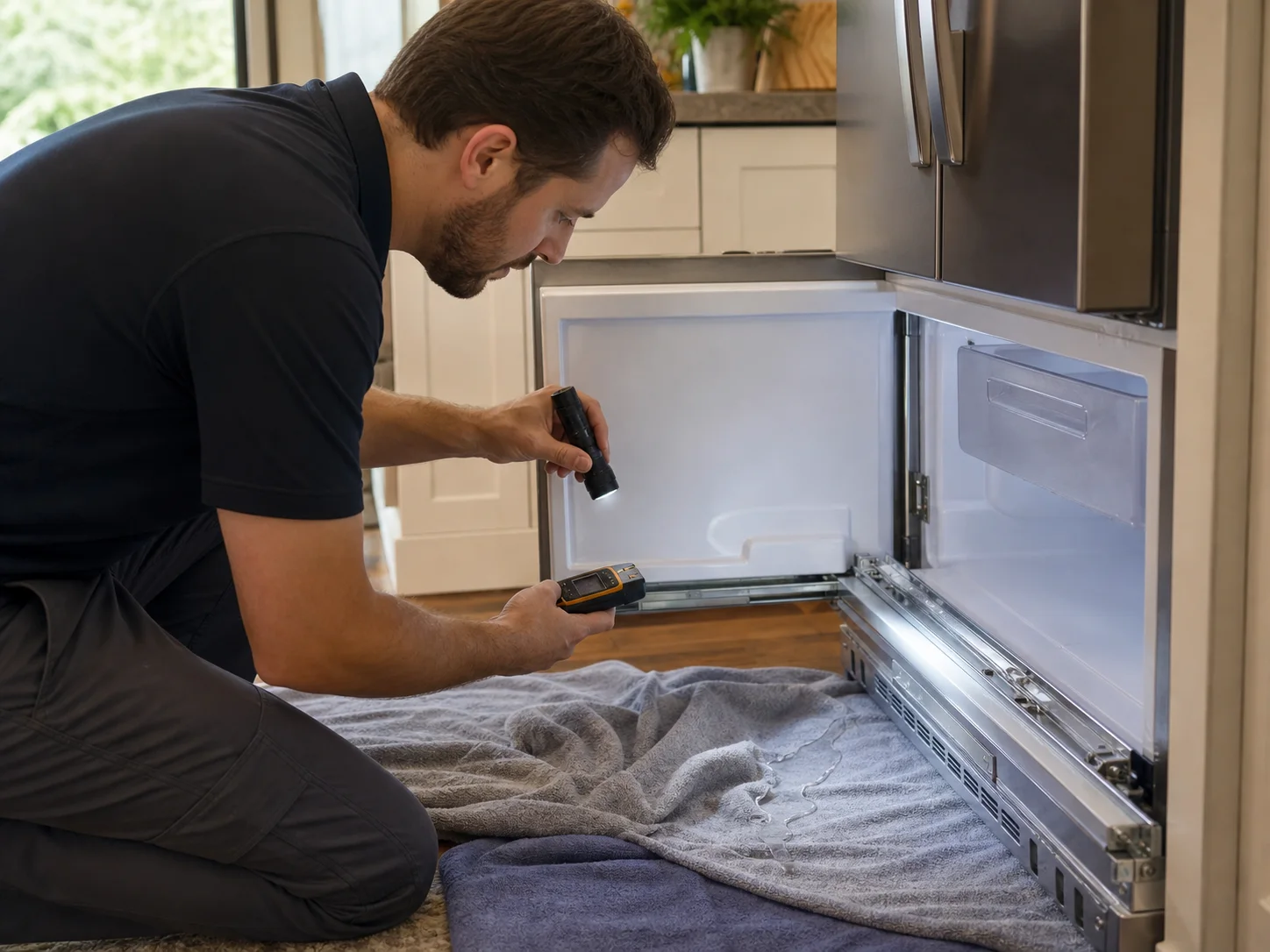
A puddle at the front of a 650 may originate from the lower freezer drain, ice-maker fill, inlet valve, supply tubing, drain pan, or condensation caused by an upper door or freezer drawer gap. Water travels, so the nearest wet surface is not automatically the source. Timing and the highest wet point are the useful first observations.
Safe checks you can make first
- Photograph frost, ice, and the highest visible wet point
- Note whether leaking follows ice fill, defrost, or humid door openings
- Check accessible supply tubing and shutoff without moving the unit
- Inspect upper door and freezer drawer gasket contact
- Photograph the complete Sub-Zero 650 and 650G model and serial tag
- Preserve visible frost, water, messages, and temperature readings before resetting or cleaning
Stop for gas odor, smoke, damaged wiring, active leaks near electrical parts, or repeated breaker trips. Avoid internal gas, refrigerant, or live-voltage work and arrange professional service.
Common causes behind the symptom
The freezer defrost drain is restricted
Ice or debris can redirect meltwater into the drawer, cabinet base, or floor instead of the intended drain path.
Ice fill water misses or overfills
Fill-tube ice, alignment, valve timing, or an ice-system condition can release water during a fill event.
A supply connection or valve seeps
Tubing and fittings may leak constantly, while a valve problem may appear only during or after an energized fill.
Door or drawer condensation accumulates
A gasket, hinge, rail, panel, or interference condition can admit humidity, create frost, and later release meltwater.
The drain pan or routing is affected
Water reaching the machine or drain-pan area can overflow, miss the pan, or follow cabinet surfaces before becoming visible.
Read the failure pattern before replacing parts
Water after ice fill prioritizes the water and ice branch. Water appearing with freezer frost or after a defrost interval prioritizes drainage. Moisture concentrated at one gasket edge suggests humid-air entry. Constant dampness near a fitting suggests a supply path.
Service dries and observes the cabinet during the relevant stage, tests drain flow, ice fill, valve shutoff, accessible connections, door and drawer sealing, frost pattern, and drain-pan routing. Controlled observation is safer and more accurate than repeated cycles.
What the repair scope can include
Repairs can include drain correction, fill-path service, valve or tubing replacement, ice-system repair, gasket or hinge correction, drawer alignment, or drain-pan routing. Water damage outside the appliance may require separate restoration assessment.
Why this guide stays specific to Sub-Zero 650 and 650G
The 650's lower freezer drawers place drainage and ice-fill evidence differently from side-by-side 600 Series models. The 650G also adds glass-door condensation observations in the upper section.
When to stop using the appliance
Close the accessible water shutoff for an active supply or fill leak. Disconnect electricity if water approaches wiring or components. Protect flooring and avoid pulling the heavy built-in without a planned removal procedure.
Frequently asked questions
Why does the 650 leak only when making ice?
The fill tube, inlet valve, connection, mold fill, or ice-system alignment becomes more likely when water appears during that stage.
Can freezer frost become a water leak?
Yes. Frost from defrost trouble or humid-air entry can melt and exceed or bypass the intended drain path.
Should I keep running the ice maker to locate the leak?
Not during an active leak. Shut off water, document timing and wet locations, and use controlled testing during service to avoid additional damage.
Should I order a part for this Sub-Zero 650 and 650G symptom before diagnosis?
No. Several systems can produce the same visible symptom, and production revisions can change compatible parts. Record the full tag and test the failure path first.
Ghost Appliance Repair is an independent service company and is not affiliated with or endorsed by Sub-Zero or its manufacturer.