
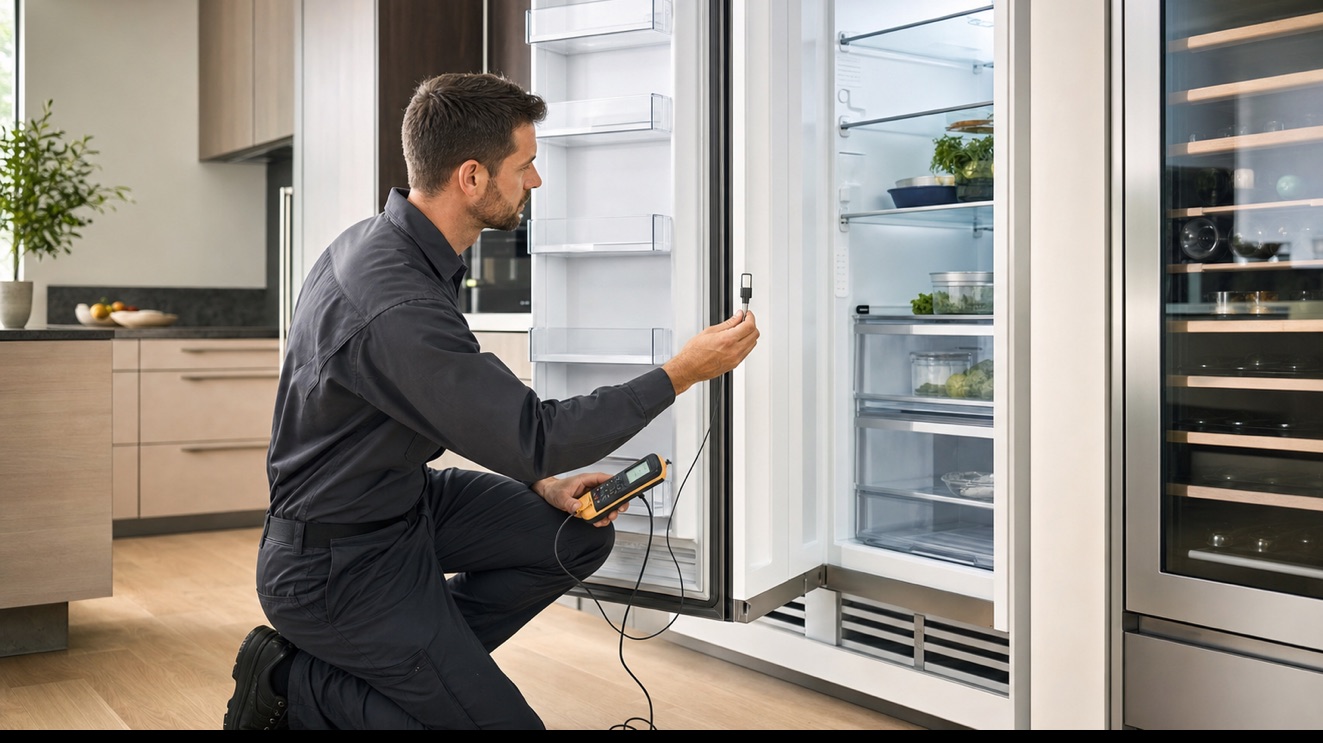
A temperature alarm reports that the control detected a condition; it does not identify the failed part. The alert may follow a door left open, a large warm load, a power interruption, restricted airflow, frost, sensing trouble, or loss of cooling capacity. The first response is to protect food, record the complete message, and compare the displayed information with an independent temperature reading.
Safe checks you can make first
- Record the complete alarm or service message before clearing it
- Measure every affected compartment with a reliable thermometer
- Confirm each door and drawer closes without package interference
- Note recent power loss, cleaning, loading, or extended door opening
- Look for frost, condensation, water, or unusual cabinet heat
- Follow acknowledgment instructions only for the exact model
Stop for gas odor, smoke, damaged wiring, active leaks near electrical parts, or repeated breaker trips. Avoid internal gas, refrigerant, or live-voltage work and arrange professional service.
Common causes behind the symptom
A door or drawer did not close completely
Package interference, ice, panel alignment, hinge condition, or gasket contact can admit room air. The alarm can persist after the door closes because the cabinet still needs time to recover.
A temporary event raised cabinet temperature
A power outage, long loading period, large quantity of warm food, or recent service can trigger an alert. Measured recovery should be steady; a temperature that stalls or rises again is not a normal recovery pattern.
Frost or fan trouble is restricting airflow
A stopped fan, blocked return, or dense evaporator frost can leave one area warm even while cooling continues elsewhere. The location of frost and the first compartment affected guide the diagnosis.
A sensor, wiring path, or control decision is inaccurate
The control relies on temperature feedback and door information. A displayed setting, measured temperature, and sensor reading may disagree when feedback or wiring is unstable.
Heat rejection or refrigeration capacity is reduced
Condenser airflow, fan operation, compressor performance, and refrigerant flow are considered when the cabinet cannot recover despite closed doors and verified interior airflow.
Silencing an alarm is not the same as solving it
An acknowledgment changes the notification state, not the cabinet temperature. Before clearing anything, photograph or write down the complete message, affected compartment, actual temperature, and time. Use only the user instructions for the exact model because button sequences and message meanings can vary by generation.
Continue monitoring after acknowledgment. A cabinet that returns steadily toward normal after a known door or power event presents different evidence from one that remains flat, warms again, runs continuously, or develops frost and unusual noise.
Use the recovery trend to judge urgency
One reading cannot show whether the appliance is recovering. Take readings at sensible intervals while keeping the doors closed. Transfer food when temperatures rise or remain unsafe, and follow current food-safety guidance rather than assuming the alarm threshold guarantees product condition.
Schedule prompt diagnosis when the alarm returns, temperature continues upward, the cabinet becomes unusually hot, a fan or compressor sound changes, or frost and water appear. Smoke, burning odor, damaged wiring, or water near electrical parts requires immediate shutdown when it can be done safely.
The exact model keeps the message in context
Sub-Zero built-in combinations, columns, wine storage, and undercounter products do not all use identical sensors, airflow, controls, or messages. The full model number allows the service company to interpret the alert for the correct generation and prepare for the appropriate product layout.
Frequently asked questions
Why does the Sub-Zero alarm keep returning after I clear it?
The cabinet may still be warm, the door condition may remain, airflow or sensing may be unstable, or cooling capacity may be reduced. Clearing the alert does not correct its cause.
Can a power outage trigger a temperature alarm?
Yes. Record the event and monitor measured recovery with the doors closed. A temperature that does not improve or rises again requires further investigation.
Does a temperature alarm mean the compressor failed?
No. Door closure, warm loading, airflow, frost, fans, sensors, controls, condenser conditions, and the refrigeration system can all lead to a temperature alert.
What should I provide when booking service?
Share the complete model number, exact alarm text, measured temperatures, affected compartments, recovery trend, and any recent door, power, cleaning, loading, frost, water, or noise event.
Ghost Appliance Repair is an independent service company and is not affiliated with or endorsed by Sub-Zero or its manufacturer.