
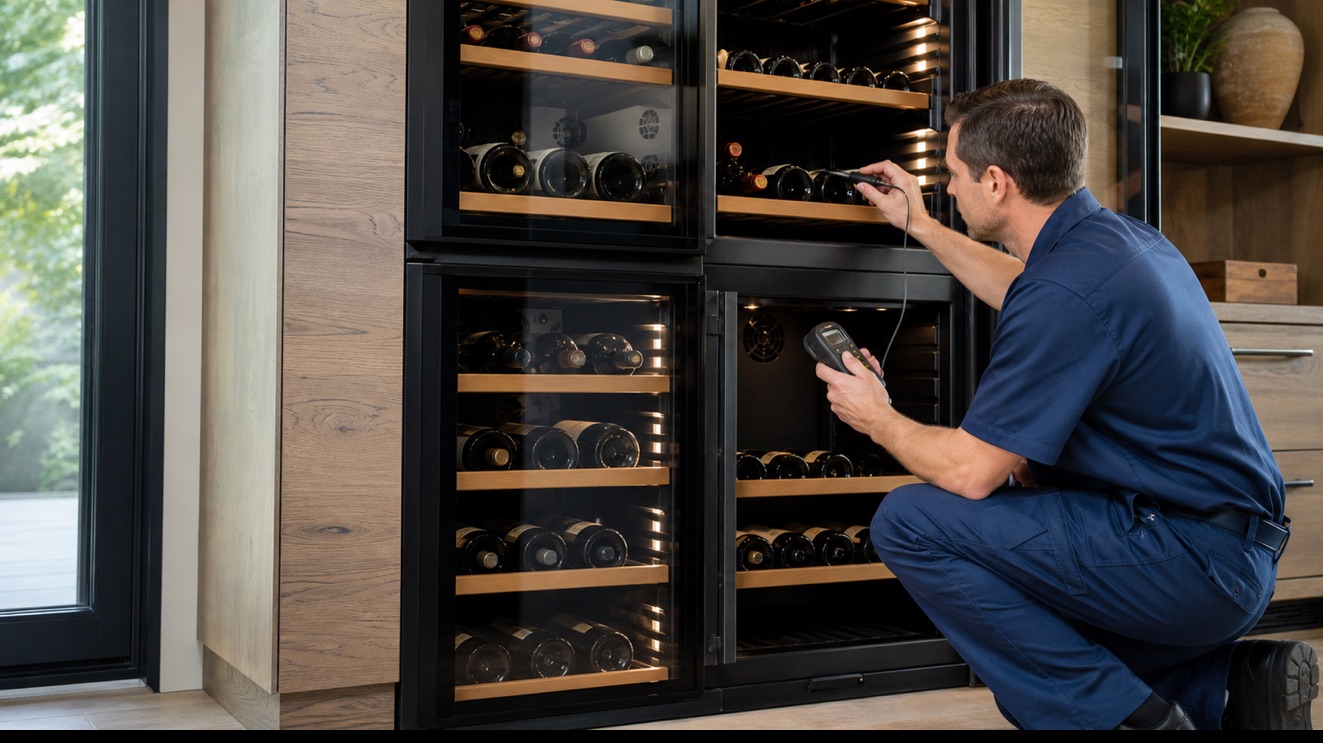
Wine storage needs stable measured temperature, controlled airflow, and an even door seal. A displayed setpoint does not prove the bottles are being held at that temperature, and a dual-zone product can fail in one section while the other remains stable. Diagnosis should protect the collection while preserving the pattern that separates airflow, sensing, cabinet, and refrigeration faults.
Safe checks you can make first
- Measure each zone with a separate reliable thermometer
- Record whether the temperature is stable or continuing to rise
- Confirm bottles do not prevent racks or the door from closing
- Keep interior air outlets and returns uncovered
- Look for condensation or frost along one gasket edge
- Note fan changes, alarms, recent loading, and power interruptions
Stop for gas odor, smoke, damaged wiring, active leaks near electrical parts, or repeated breaker trips. Avoid internal gas, refrigerant, or live-voltage work and arrange professional service.
Common causes behind the symptom
One zone is not moving air correctly
A fan, air path, damper, or frost condition can isolate a compartment even while another zone remains close to its setpoint. Bottle placement can also cover a return or interfere with circulation.
Temperature sensing or control feedback is inaccurate
A thermistor, wiring path, or control interpretation can cycle cooling at the wrong time. Actual zone readings and component commands are needed before calibration or a sensor is considered.
The glass door or gasket is admitting room air
Rack interference, hinge or panel alignment, gasket damage, and repeated incomplete closure add heat and humidity. Condensation near one edge often develops before the full zone warms.
Condenser ventilation is restricted
Dust, a weak fan, blocked grille airflow, or warm air recirculating through cabinetry raises operating temperature and can reduce capacity across both zones.
The refrigeration system cannot maintain capacity
Compressor or refrigerant-flow conditions are evaluated after airflow, door sealing, defrost behavior, sensing, controls, and installation ventilation are documented.
Compare zones instead of averaging them
One warm zone with one stable zone points toward components and airflow serving the affected section. Two zones rising together make power, condenser conditions, shared control decisions, and refrigeration capacity more relevant. Keep a short log with time and temperature for each zone rather than relying on a single display reading.
Do not keep lowering both setpoints. A colder command can increase run time without correcting a failed fan, gasket gap, sensor, or refrigeration problem, and it may hide which zone changed first.
Protect the collection before troubleshooting
Move temperature-sensitive bottles to dependable storage when readings leave the acceptable range for the collection. Keep the door closed while arranging storage and service. Repeatedly opening the cabinet to check the display adds heat and makes the recovery pattern harder to interpret.
If condensation reaches wood racks, finished cabinetry, or electrical areas, stop use as appropriate and address the moisture promptly. Photograph the original location before cleaning it away.
Model and installation determine service access
Undercounter wine storage, tall built-in units, and integrated configurations use different airflow and access arrangements. The full model number identifies zone layout, ventilation needs, sensing, and removal procedures. Service planning should protect glass doors, racks, panels, flooring, and surrounding millwork.
Frequently asked questions
Why is one Sub-Zero wine cooler zone warm?
The affected zone may have its own fan, sensor, airflow path, or control behavior. A stable second zone helps narrow the diagnosis but does not identify the failed component by itself.
Can too many bottles stop a wine cooler from cooling?
Loading can block airflow or prevent racks and the door from closing completely. A continuing temperature rise after normal clearance is restored still needs diagnosis.
Does condensation mean the cooling system failed?
Not necessarily. Humid air entering through a door or gasket gap can create condensation even while cooling operates. Drainage, cabinet heat, and refrigeration performance can also contribute.
What information should I provide for wine-cooler service?
Provide the full model number, temperature log for each zone, alarm text, condensation or frost location, fan changes, and any recent loading, power, or cabinet event.
Ghost Appliance Repair is an independent service company and is not affiliated with or endorsed by Sub-Zero or its manufacturer.