
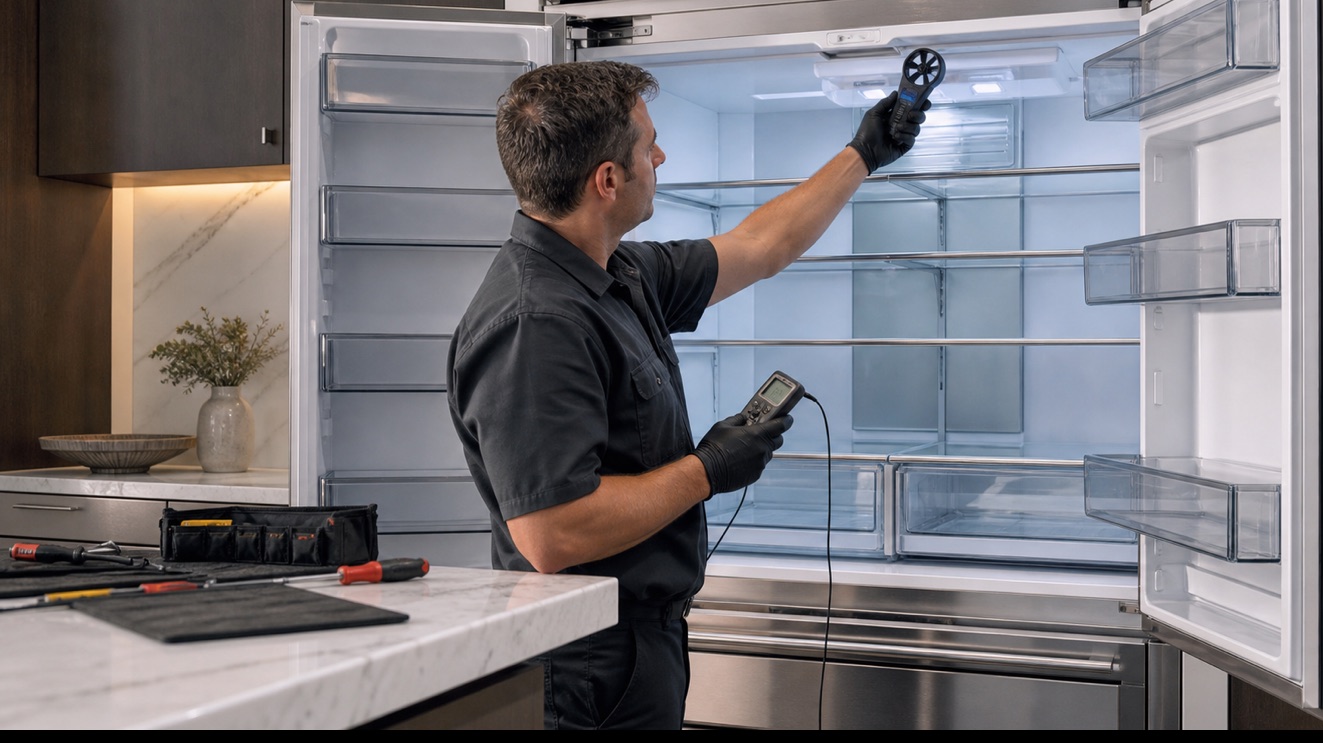
Viking refrigeration spans different cabinet styles and product generations, so the model number matters. Diagnosis still begins with the same strong evidence: actual temperatures, which compartment changed first, the frost pattern, fan behavior, and whether the built-in installation can reject heat.
Safe checks you can make first
- Record refrigerator and freezer temperatures separately
- Check door closure and visible gasket contact
- Keep interior supply and return vents unobstructed
- Listen for a fan that is silent, rough, or cycling
- Look for frost on interior panels and water below drawers
- Note recent power interruptions, cleaning, or cabinet work
Stop for gas odor, smoke, damaged wiring, active leaks near electrical parts, or repeated breaker trips. Avoid internal gas, refrigerant, or live-voltage work and arrange professional service.
Common causes behind the symptom
Interior airflow has stopped
A fan, frost blockage, damper, or covered return can prevent cold air from circulating through one or both sections.
Defrost operation is incomplete
Ice can accumulate when a heater, sensor, wiring path, drain, or control does not complete the defrost sequence.
Condenser ventilation is poor
Dust, a weak fan, or limited built-in airflow increases compressor load and can cause gradual warming during heavy use.
Door leakage adds heat and moisture
Gasket damage, hinge alignment, panel interference, and overloaded shelves can create both cooling loss and condensation.
Cooling capacity is reduced
A compressor, refrigerant restriction, leak, or related sealed-system fault is evaluated after air movement and controls are verified.
Follow the first compartment to warm
If the freezer stays stable while fresh food warms, focus moves toward that section's airflow and sensing. If both rise after long run time, condenser conditions and refrigeration capacity deserve more attention. A temperature alarm after a door event is not the same as a trend that continues with the doors closed.
Avoid turning both controls colder as the first response. That can mask the original sequence and may increase frost or run time without correcting airflow.
Built-in service begins before the unit is moved
Panels, water connections, floor protection, anti-tip provisions, ventilation, and electrical access should be reviewed before removal. Many measurements can be made with the refrigerator installed. The exact model helps determine service access and prevents unnecessary disturbance to cabinetry.
Frequently asked questions
Why does my Viking refrigerator run constantly?
Long run time can follow warm loading or door use, but persistent operation with poor temperatures can involve airflow, condenser conditions, sensing, door leakage, or reduced cooling capacity.
Can frost make the refrigerator warm?
Yes. Dense evaporator frost can block air circulation even while some areas remain very cold.
Should I pull a built-in refrigerator out to clean it?
Do not move heavy built-in equipment without the model procedure, floor protection, and awareness of water, power, panels, and anti-tip hardware.
Is the compressor always the cause when both sections are warm?
No. Condenser airflow, power, controls, fans, doors, defrost, and the sealed system can all affect both compartments. Testing should establish the failure before that conclusion.
Ghost Appliance Repair is an independent service company and is not affiliated with or endorsed by Viking or its manufacturer.