
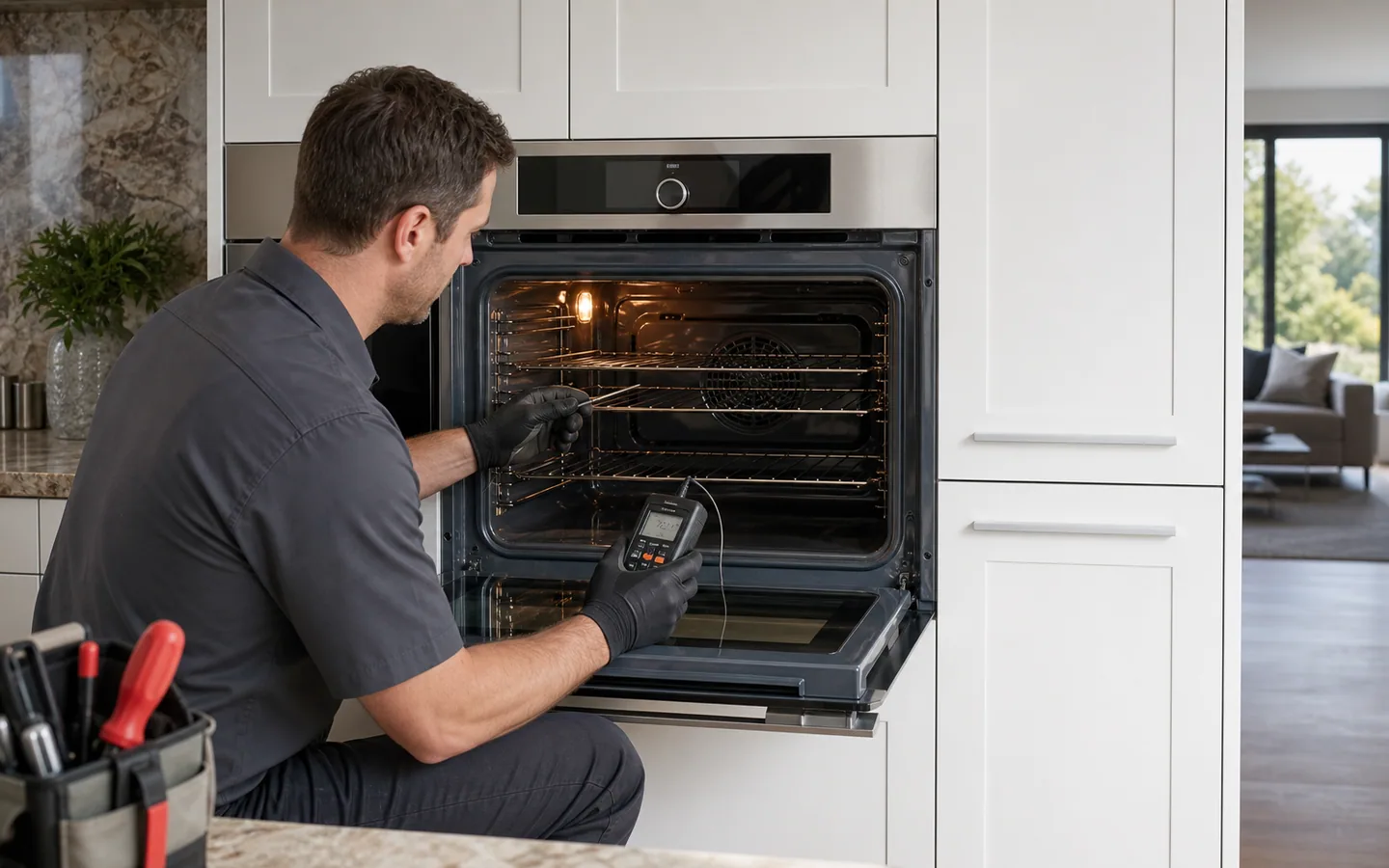
A Wolf oven can fail in one mode, one cavity, or only after it reaches temperature. Separating bake, broil, convection, and preheat behavior gives the technician a much clearer starting point than the statement that the oven is cold.
Safe checks you can make first
- Confirm the mode, temperature, and cavity selected
- Compare bake and broil without opening service panels
- Record whether the convection fan starts
- Note the preheat time and whether the ready signal occurs
- Save the complete error message or code
- Stop for gas odor, smoke, electrical odor, or uncontrolled heat
Stop for gas odor, smoke, damaged wiring, active leaks near electrical parts, or repeated breaker trips. Avoid internal gas, refrigerant, or live-voltage work and arrange professional service.
Common causes behind the symptom
Gas ignition is too weak or delayed
On gas configurations, an igniter can glow yet fail to open the safety valve consistently. Current draw and ignition timing must be measured.
A heating element or connection is open
Electric and dual-fuel ovens can lose a bake, broil, or convection heat circuit while other modes continue to operate.
Cavity temperature feedback is wrong
Sensor drift, wiring resistance, or control interpretation can cause early cycling or an inaccurate preheat indication.
Airflow or door sealing is reducing recovery
A weak convection fan, cooling-system issue, hinge condition, or gasket gap can create uneven cooking and slow recovery.
Relay, control, or supply power is interrupted
A display can operate while the high-current heating circuit is missing a relay output, connection, or part of the electrical supply.
Compare modes before assuming calibration
A consistent offset across modes may justify calibration after the oven is proven to cycle normally. One dead mode, large swings, or a cavity that never recovers points to a component or control problem instead. In double ovens, document whether the second cavity behaves normally.
Avoid repeated resets before recording the code and sequence. Controls can store useful timing information, and a reset cannot restore an open element, weak igniter, failed fan, or damaged connection.
Built-in oven access is part of the repair
Wall ovens may require removal for electrical and component access. The model, cabinet opening, trim, floor protection, electrical disconnect, and safe handling all affect the visit. Sharing the full model number allows the service company to plan before moving a heavy appliance.
Frequently asked questions
Why does my Wolf oven take a long time to preheat?
A weak igniter, missing heating circuit, sensor error, door loss, or control problem can slow heat rise. The cause depends on the fuel type and mode.
Can calibration fix uneven baking?
Calibration only corrects a stable offset. Uneven results can involve airflow, a heating circuit, rack position, door sealing, or a sensor that is not cycling consistently.
Why does one Wolf oven cavity work and the other not?
Separate elements, igniters, sensors, fans, and control outputs may serve each cavity. The working side helps narrow shared power and control questions.
Is self-clean safe when the oven already has an error?
Do not use self-clean as a test. Its sustained high heat can worsen lock, cooling, wiring, and control problems.
Ghost Appliance Repair is an independent service company and is not affiliated with or endorsed by Wolf or its manufacturer.