
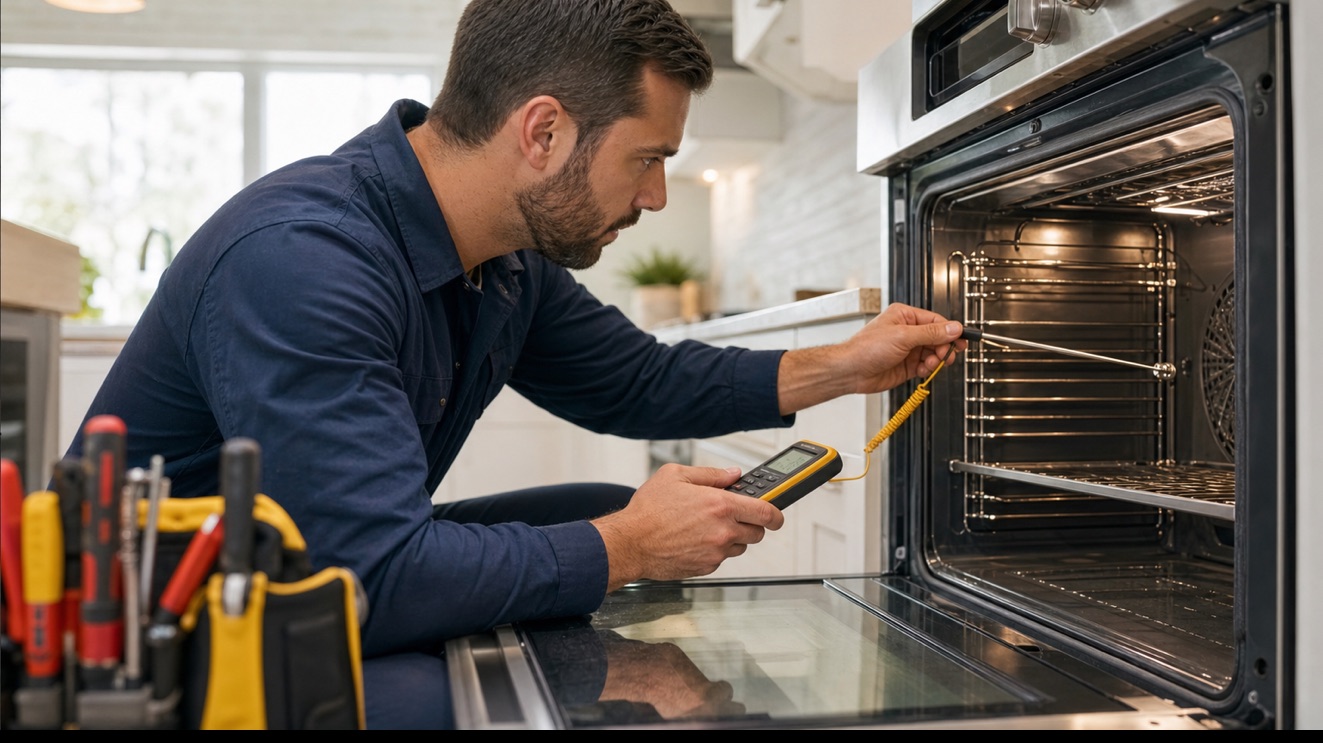
A Wolf oven complaint is most useful when it is tied to a cooking mode, heat stage, control action, or sound. If it does not hold an accurate temperature, compare the functions that still operate with the exact moment the sequence changes. This mode-by-mode evidence gives a stronger starting point than replacing the first visible part.
Safe checks you can make first
- Compare results in bake and convection modes
- Allow the cavity and cookware to stabilize after preheat
- Record several temperature cycles instead of one peak reading
- Check whether one rack position or one oven cavity is affected
- Record the complete model number and any message before resetting power
- Stop for smoke, burning odor, gas odor, active water near electricity, or repeated breaker trips
Stop for gas odor, smoke, damaged wiring, active leaks near electrical parts, or repeated breaker trips. Avoid internal gas, refrigerant, or live-voltage work and arrange professional service.
Common causes behind the symptom
Calibration is masking a performance fault
A small consistent offset may be adjustable, but wide swings, slow recovery, and mode-to-mode differences point toward heating, sensing, airflow, or electronic control trouble that calibration cannot repair.
The oven sensor is reporting the wrong temperature
Sensor resistance, mounting, harness, and electronic control interpretation affect cycling. A countertop thermometer reading alone is not enough to identify which part of the feedback path is inaccurate.
A heating circuit is open
A failed element, connection, relay, thermal device, or supply path may remove all or part of the heat. Resistance, voltage, and command tests identify the interrupted point.
The convection system is not moving air normally
A fan motor, blade, bearing, relay, harness path, or obstruction may change temperature distribution and create noise. Fan behavior needs to be compared across the modes that use it.
A control or wiring path is interrupted
Relays, connectors, harnesses, user controls, and power-supply circuits may prevent a working assembly from receiving the correct command. Voltage and continuity tests needs to follow the model harness information.
Read the operating pattern before resetting
A consistent small offset across several cycles differs from wide swings, slow recovery, or food that burns on one side. Comparing modes and cavities can reveal whether the problem follows one heating circuit, fan, or shared control.
Write down the selected mode, elapsed time, and the first change you observe when the oven does not hold an accurate temperature. Preserve any display message and avoid repeated high-heat trials that can alter the original pattern.
What a complete diagnosis should confirm
Diagnosis measures temperature through complete cycles and compares sensor response, element or igniter operation, relay commands, airflow, door sealing, and supply power. Calibration should be considered only after those systems cycle normally.
Professional testing separates calibration is masking a performance fault, the oven sensor is reporting the wrong temperature, a heating circuit is open, the convection system is not moving air normally, a control or wiring path is interrupted. The recommendation should follow live electrical, heat, airflow, or ignition measurements for the exact Wolf configuration, rather than the symptom name alone.
Model and installation details change the repair
Wolf gas, electric, dual-fuel, wall-oven, and dual-cavity products do not use the same heating sequence. Model and fuel type determine the correct test points and allowable adjustment.
Stop use for uncontrolled heating, smoke, electrical odor, gas odor, or repeated breaker trips. For a stable mild offset, avoid critical cooking until the oven is measured and corrected.
Frequently asked questions
What can cause this Wolf oven problem?
Wolf products can reach this symptom through calibration is masking a performance fault, the oven sensor is reporting the wrong temperature, a heating circuit is open, the convection system is not moving air normally, a control or wiring path is interrupted. The affected functions, sequence, and model-specific readings show which path is actually present.
Should I reset this Wolf appliance before service?
Write down the selected mode, elapsed time, and the first change you observe when the oven does not hold an accurate temperature. Preserve any display message and avoid repeated high-heat trials that can alter the original pattern. One reset described in the exact user guide may be reasonable after a power event, but repeated resets can conceal an intermittent fault.
Can I keep using the appliance?
Stop use for uncontrolled heating, smoke, electrical odor, gas odor, or repeated breaker trips. For a stable mild offset, avoid critical cooking until the oven is measured and corrected.
What information helps the technician prepare?
Provide the full model number, installation type, the first failed function, any code or alarm exactly as displayed, and the photos or temperature notes described above. Wolf gas, electric, dual-fuel, wall-oven, and dual-cavity products do not use the same heating sequence. Model and fuel type determine the correct test points and allowable adjustment.
Ghost Appliance Repair is an independent service company and is not affiliated with or endorsed by Wolf or its manufacturer.