
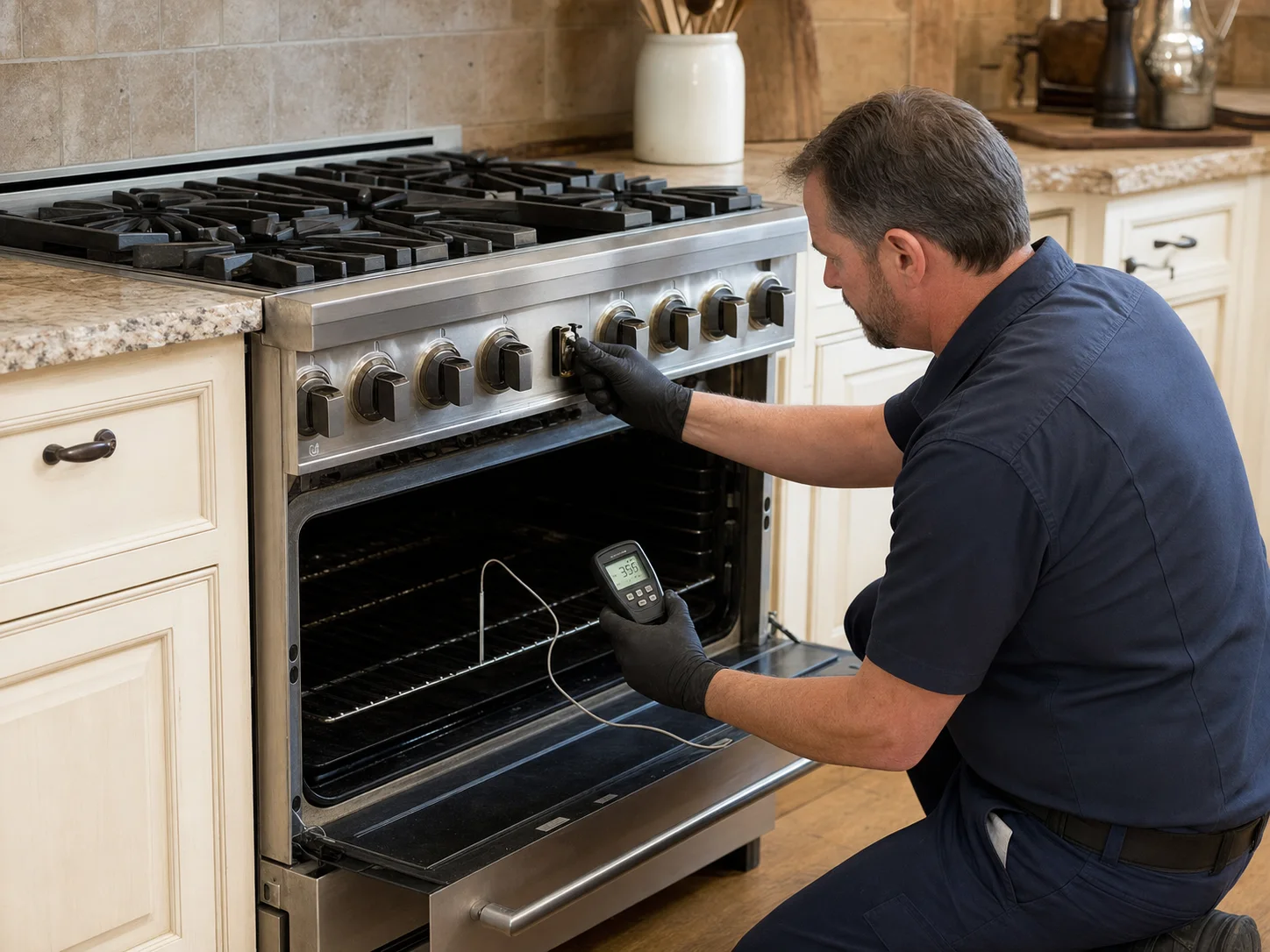
The Viking VDSC365 is a retired 36-inch open-burner dual-fuel range. Its surface ignition and gas components belong to a different diagnostic branch from the electric oven, convection, temperature, and self-clean systems below. Age increases the importance of the complete suffix, wiring condition, prior repairs, and parts verification, but it does not identify the failed component by itself.
Identify the exact equipment first
- Photograph the complete Viking VDSC365 model and serial tag
- Confirm the full VDSC365 suffix and fuel setup
- Identify the exact surface burner or electric oven mode affected
- Record preheat, indicator, convection, self-clean, and power behavior
- Record actual temperatures, operating mode, error messages, and when the symptom began
Protect people, property, and stored product first. Stop for gas odor, smoke, damaged wiring, active leaks near electrical parts, or repeated breaker trips. Leave internal gas, refrigerant, and live-voltage testing to a qualified technician.
Systems that shape the diagnosis
Open-burner ignition and assembly
Burner assembly, ports, electrodes, wiring, switches, spark control, gas flow, and correct reassembly determine ignition and flame stability.
Electric bake and broil circuits
Elements, relays, wiring, temperature controls, and supply can remove one mode while the gas surface continues to operate.
Temperature and preheat feedback
Sensor response, control calibration, element output, door sealing, and convection airflow affect preheat timing and cooking accuracy.
Convection and cooling movement
A cooking fan affects cavity uniformity while separate ventilation may protect surrounding components. Sound timing helps locate the source.
Legacy switches and connections
Selector switches, indicator circuits, terminals, harnesses, and past heat exposure should be inspected rather than assuming a modern control architecture.
Platform and generation
Viking retains the VDSC365 in its retired-product documentation as a 36-inch open-burner dual-fuel range. Exact suffixes and production details are required when locating the correct manual and parts information.
The gas top and electric oven remain separate diagnostic systems inside one heavy cabinet. Open-burner construction also changes surface access and cleaning-related conditions compared with current sealed-burner ranges.
How symptoms should be separated
Name the burner, oven mode, and operating stage. A dead indicator, burner without spark, weak flame, bake failure, broil-only operation, slow preheat, temperature drift, or convection noise each points toward different evidence.
Access, parts, and repair planning
The range requires gas and high-current electrical safety planning. Avoid casual move-out: confirm shutoff, anti-tip arrangement, floor protection, clearances, and whether diagnosis can be completed from the front or top.
Use the entire VDSC365 model suffix and serial number. Similar-looking Viking ranges may use different ignition, oven, control, and trim components.
Frequently asked questions
Why can the VDSC365 burners work while the oven is cold?
The burners use gas and spark ignition; the oven uses electric heating circuits. A working surface does not verify oven power, elements, switches, relays, or sensors.
Does a glowing or lit indicator prove the oven element works?
No. An indicator shows a command or circuit state, not necessarily that the element receives correct voltage and produces heat.
Is an older VDSC365 automatically beyond repair?
No. The decision depends on the diagnosed failure, wiring and cabinet condition, parts support, installation, and the owner's replacement constraints.
Why does the complete Viking VDSC365 serial information matter?
Production revisions can change controls, wiring, hinges, water components, and replacement parts without changing the appliance's general appearance. A clear tag photo keeps the diagnosis tied to the correct technical information.
Ghost Appliance Repair is an independent service company and is not affiliated with or endorsed by Viking or its manufacturer. Brand and model names identify the equipment discussed. Service and parts availability depend on the complete model, serial generation, condition, and location.