
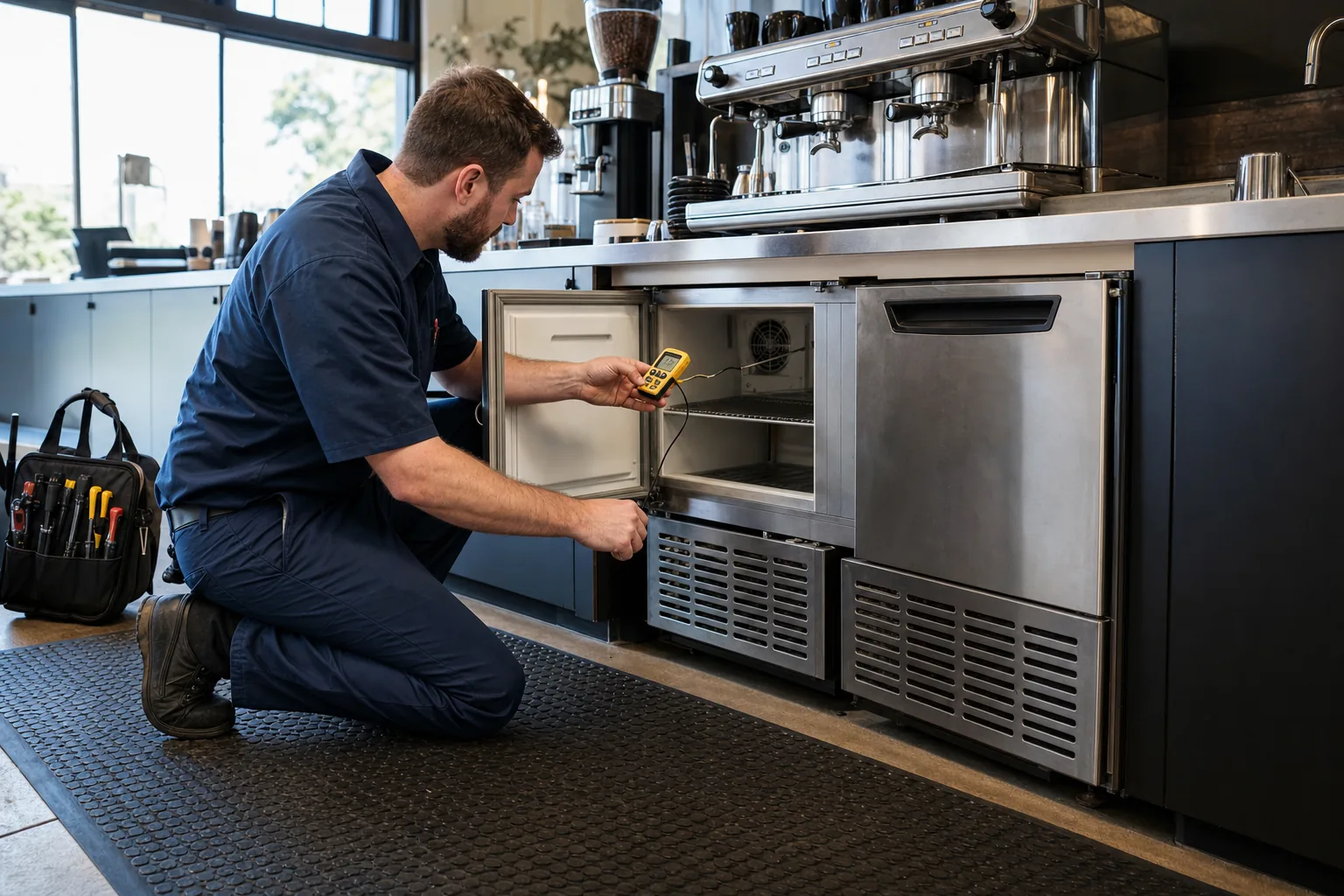
Commercial undercounter refrigerators fit cooling, airflow, controls, and doors into a compact space beneath an active work surface. Coffee equipment, cooking appliances, tight cabinetry, and floor debris can add heat or restrict the condenser. Diagnosis should include the installation around the unit, not just its internal temperature.
Identify the exact equipment first
- Measure temperature at the front and rear of each section
- Check condenser cleanliness and intake clearance
- Inspect doors, hinges, and gaskets
- Note heat-producing equipment above and beside the unit
- Record fan, compressor, and controller behavior
- Photograph the complete manufacturer model and serial plate, including every suffix
Protect people, property, and stored product first. Shut affected equipment down for gas odor, smoke, arcing, exposed wiring, active water near electrical parts, unsafe temperatures, or repeated protection trips. Move temperature-sensitive product according to the business's food-safety plan and keep time-and-temperature records.
Systems that shape the diagnosis
Compact condenser airflow
Dust, coffee debris, grease, blocked grilles, and failed fans quickly raise condensing temperature in a small machine compartment.
Door traffic and hinges
Undercounter doors receive frequent low-level impacts and openings. Sagging hinges and damaged gaskets create warm-air entry.
Interior air distribution
Product pushed against rear vents, fan failure, or coil frost can create uneven temperatures despite a cold probe location.
Work-counter heat
Espresso machines, dish equipment, and cooking surfaces can add heat. Ambient conditions must be separated from internal component faults.
What the diagnosis should prove
Compare controller and independent temperatures, inspect doors and loading, then measure condenser and evaporator airflow. Record surrounding heat and clearances. A compact unit should not be charged or adjusted before coil cleanliness, fan operation, and load are understood.
Downtime, product, and operating context
These cabinets often support a fast service station, so access timing matters. Empty the relevant section, preserve product, and clear counter operations before the visit. Repeated door opening during testing can hide recovery behavior.
Repair scope and replacement decisions
Door hardware, gaskets, probes, fans, controls, and many condensing-unit repairs are practical when the box is solid. Extensive corrosion, failed insulation, damaged rails, and obsolete sealed-system components can make replacement more sensible. Measure the opening and utility locations before ordering a new unit.
Frequently asked questions
Why does the undercounter refrigerator overheat in a cafe?
Blocked condenser airflow, nearby espresso equipment, poor clearances, fan trouble, door traffic, and kitchen ambient heat can combine.
Can I push the unit tightly against the wall?
Use the manufacturer clearances. Restricting intake or exhaust raises operating temperature and can shorten component life.
Why is product warm near the front door?
Door leakage, frequent openings, weak airflow, loading, or sensor placement can create a front-to-back temperature difference.
What information should I send for commercial undercounter refrigerator service?
Send the complete model and serial tag, power or fuel type, exact symptom, any code, measured temperatures when relevant, business hours, and clear photos of the installation and service access. Do not include customer or employee personal information in equipment photos.