
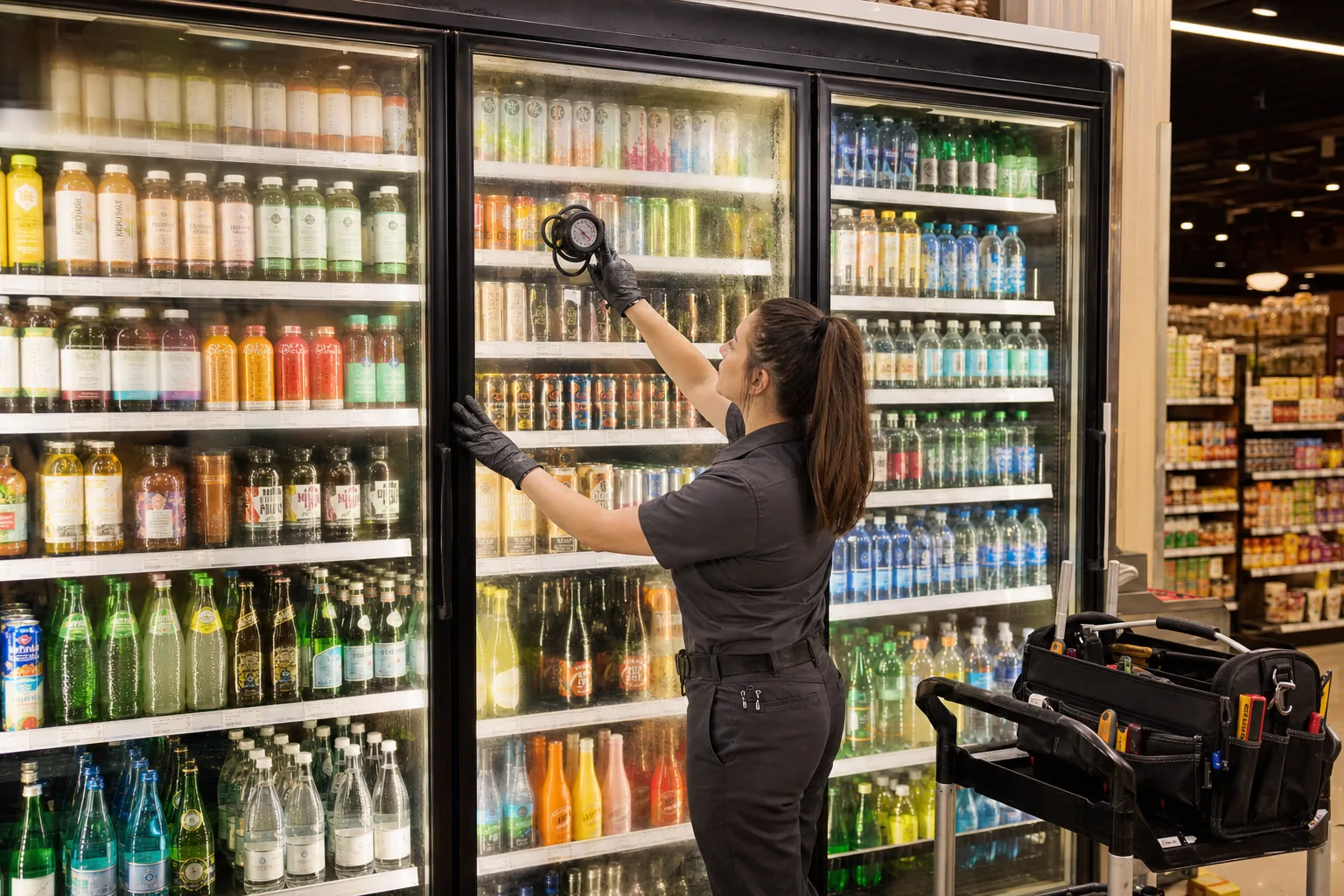
Glass-door merchandisers must hold product temperature while presenting it through heated or controlled glass doors under retail lighting. Fogging, sweat, warm shelves, and long run time can involve room humidity, door sealing, anti-sweat heat, airflow, loading, controls, or refrigeration capacity. Each door section should be mapped separately.
Identify the exact equipment first
- Measure product temperature by door and shelf
- Photograph the exact condensation pattern
- Check gasket contact and self-closing action
- Note interior fan and light operation
- Record store humidity, ambient temperature, and controller readings
- Photograph the complete manufacturer model and serial plate, including every suffix
Protect people, property, and stored product first. Shut affected equipment down for gas odor, smoke, arcing, exposed wiring, active water near electrical parts, unsafe temperatures, or repeated protection trips. Move temperature-sensitive product according to the business's food-safety plan and keep time-and-temperature records.
Systems that shape the diagnosis
Glass and anti-sweat heat
Door heaters, frame heat, controls, wiring, and humidity affect fogging. A localized wet edge differs from uniform surface condensation.
Door sealing
Closers, hinges, gaskets, and door alignment can admit humid air into one section and raise load across the cabinet.
Shelf airflow
Product blocking returns, failed fans, or coil frost creates warm shelves and uneven display temperatures.
Lighting and refrigeration load
Lights add heat, while condenser condition and store ambient affect rejection. Both electrical and refrigeration performance should be measured.
What the diagnosis should prove
Create a temperature map across doors and shelves, compare condensation location, inspect door closure, and test fan and anti-sweat operation. Then evaluate condenser airflow and refrigeration performance under known store conditions. One display temperature cannot represent a large multi-section cabinet.
Downtime, product, and operating context
Retail doors may be opened continuously during peak hours. Note whether the problem persists overnight with normal stocking and doors closed. Protect product and keep the service area clear of customers while doors, glass, and electrical systems are tested.
Repair scope and replacement decisions
Fans, controls, door hardware, gaskets, heaters, probes, and lighting repairs can extend a sound merchandiser's life. Failed glass assemblies, corroded cabinets, obsolete refrigeration systems, and repeated coil leaks require a broader cost comparison that includes merchandising downtime.
Frequently asked questions
Why does only one merchandiser door fog?
That door may have a gasket, closer, alignment, heater, wiring, or glass issue. Localized condensation is useful diagnostic evidence.
Can overstocking make drinks warm?
Yes. Product can block supply or return airflow, but persistent warm shelves after correct loading still require equipment testing.
Do interior lights affect cabinet temperature?
They add heat and can reveal control or door-switch faults. A healthy system should handle its designed lighting load under specified ambient conditions.
What information should I send for glass-door merchandiser cooler service?
Send the complete model and serial tag, power or fuel type, exact symptom, any code, measured temperatures when relevant, business hours, and clear photos of the installation and service access. Do not include customer or employee personal information in equipment photos.