
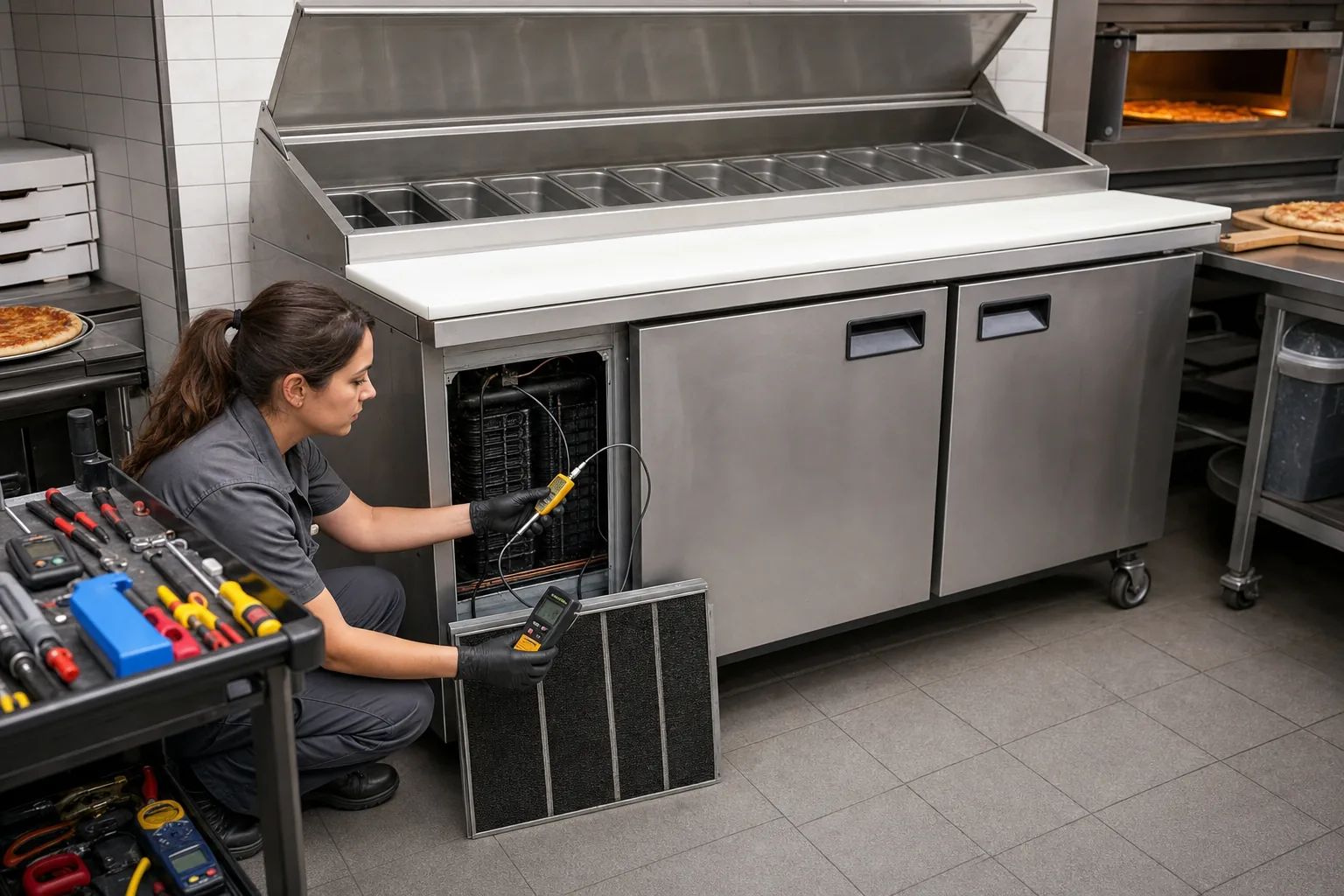
A refrigerated prep table must protect both the lower cabinet and the ingredient rail, but those areas do not always cool in the same way. Pan depth, product loading, lids, airflow, kitchen heat, and service activity affect rail temperatures. A cold base cabinet does not automatically prove the upper rail is operating correctly.
Identify the exact equipment first
- Measure product and air temperatures in the rail and base separately
- Record pan depth, fill level, and lid use
- Inspect condenser and evaporator airflow
- Check lower doors, gaskets, and loading
- Note kitchen ambient temperature and nearby hot equipment
- Photograph the complete manufacturer model and serial plate, including every suffix
Protect people, property, and stored product first. Shut affected equipment down for gas odor, smoke, arcing, exposed wiring, active water near electrical parts, unsafe temperatures, or repeated protection trips. Move temperature-sensitive product according to the business's food-safety plan and keep time-and-temperature records.
Systems that shape the diagnosis
Rail airflow or cold-wall performance
Design-specific airflow, pan fit, loading, and frost can leave ingredients warm while the base cabinet appears normal.
Cabinet airflow
Fans, blocked returns, coil frost, and overloading affect lower-door temperatures and compressor run time.
Condenser heat
Grease and kitchen ambient temperature load compact condensing units. Clearances and fan performance matter during peak service.
Controls and probes
One or more sensors may influence rail and cabinet operation. Controller readings should be compared with calibrated product measurements.
What the diagnosis should prove
Map temperatures by pan and cabinet section under normal configuration. Verify lid position, correct pans, airflow, defrost, condenser condition, and control sequence. Diagnose the rail and base as related zones instead of averaging them into one cabinet temperature.
Downtime, product, and operating context
Prep tables are opened frequently and often sit beside ovens or fryers. Record whether the problem appears only during service or persists overnight. Product handling, pan depth, and loading must be corrected alongside equipment faults to keep the repair effective.
Repair scope and replacement decisions
Fans, probes, controllers, gaskets, and condensing-unit components can be practical repairs when the cabinet and rail remain sound. Corroded pans, damaged lids, failed insulation, repeated coil leaks, and poor line placement can change the economics. Food-safety risk may justify temporary equipment before repair.
Frequently asked questions
Why is the lower cabinet cold but the top pans warm?
The rail may use a different airflow or cold-wall path, and pan fit, loading, lid use, ambient heat, frost, or controls can affect it independently.
Can deep pans cause temperature problems?
Yes. Incorrect pan depth or poor fit can block designed airflow and place product outside the effective cooling zone.
Should the lid stay closed when the line is idle?
Follow the equipment and food-safety procedures. Closing the lid generally reduces heat load, but it will not correct an equipment fault.
What information should I send for refrigerated prep table service?
Send the complete model and serial tag, power or fuel type, exact symptom, any code, measured temperatures when relevant, business hours, and clear photos of the installation and service access. Do not include customer or employee personal information in equipment photos.