
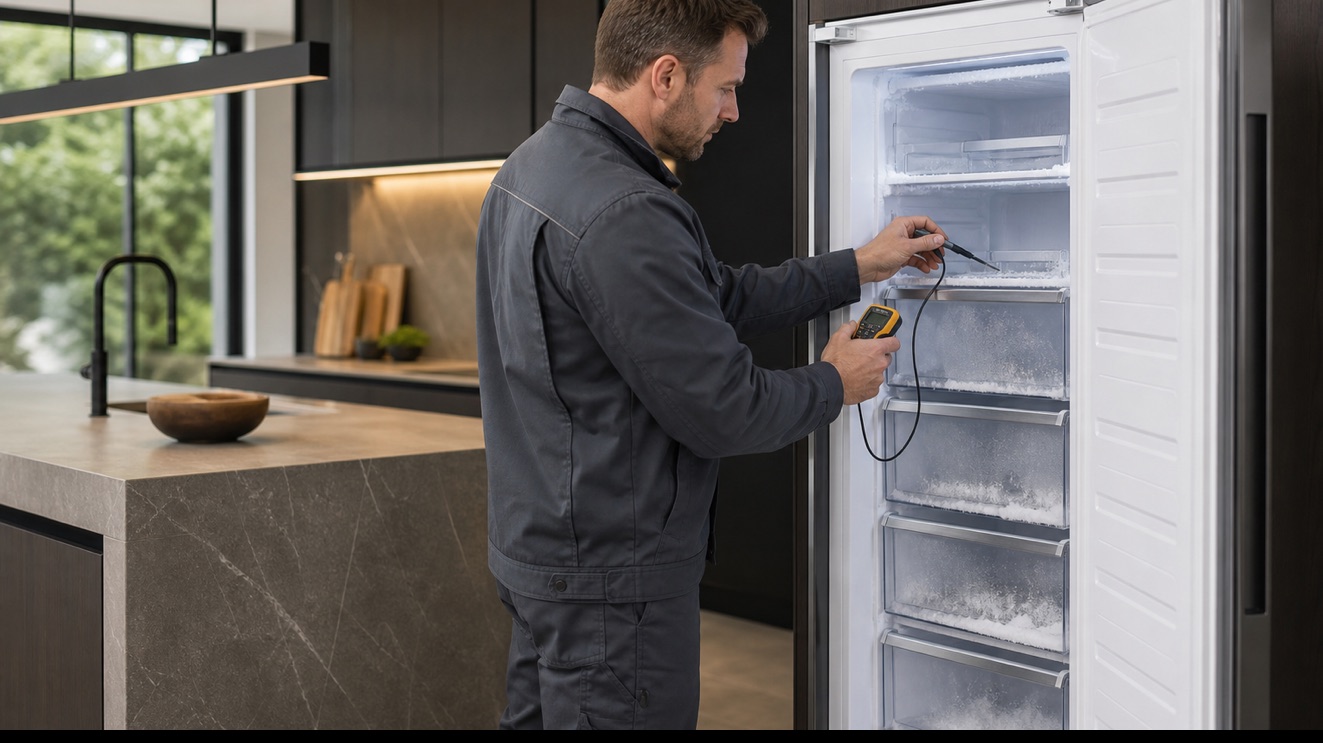
Thermador freezer column electronics monitor several inputs before allowing the next operating step. If the product cannot maintain temperature, preserve the selected program, affected zone or compartment, and the point where progress stops. That context keeps a sensor, module, or power symptom from being mistaken for a confirmed failed part.
Safe checks you can make first
- Measure temperature and record whether it is rising or fluctuating
- Confirm the tall door closes evenly against the gasket
- Photograph frost or condensation before it changes
- Keep interior vents clear and note fan sound
- Record the complete model number and any message before resetting power
- Stop for smoke, burning odor, gas odor, active water near electricity, or repeated breaker trips
Stop for gas odor, smoke, damaged wiring, active leaks near electrical parts, or repeated breaker trips. Avoid internal gas, refrigerant, or live-voltage work and arrange professional service.
Common causes behind the symptom
The tall column door is adding a continuous heat load
Panel weight, hinge geometry, cabinet level, or localized gasket contact may leave a subtle gap along the full-height opening. Condensation and edge frost help locate the loss.
Column airflow is no longer reaching every shelf
A fan, return path, dense loading pattern, or ice behind an interior cover may produce different readings from top to bottom. Shelf temperatures must be compared without blocking vents.
Ice behind the column liner is reducing capacity
Defrost heat, sensing, drainage, and timing work together to clear the evaporator. A progressive warm trend with changing fan sound may develop only after concealed frost becomes visible.
The column is cycling from unreliable feedback
Compartment sensors, evaporator sensing, door inputs, and their electrical paths influence cooling and alarms. Independent thermal measurements are needed to compare the command with cabinet conditions.
Refrigeration capacity is reduced
Compressor or refrigerant-flow conditions are considered after doors, airflow, defrost, sensors, controls, and installation ventilation are tested. Run time by itself does not prove a sealed-system failure.
Read the operating pattern before resetting
A steady warm trend differs from brief recovery after loading, and localized frost at a door edge differs from dense frost behind an interior panel. An adjacent refrigerator column can remain normal because it may be a separate appliance.
Document the active zone, cavity, compartment, or cycle when the freezer column cannot maintain temperature. Include the exact display state and recent power, cleaning, plumbing, or installation events before attempting a reset.
What a complete diagnosis should confirm
Service checks door and panel alignment, gasket contact, evaporator airflow and frost, defrost components, sensors, condenser ventilation, control commands, compressor operation, and refrigeration capacity.
Thermador diagnosis must distinguish the tall column door is adding a continuous heat load, column airflow is no longer reaching every shelf, ice behind the column liner is reducing capacity, the column is cycling from unreliable feedback, refrigeration capacity is reduced. Model-specific readings from sensors, modules, loads, and the electrical path provide the evidence for repair; a displayed symptom by itself does not.
Model and installation details change the repair
Column width, generation, panel installation, hinge side, and independent or shared ventilation affect access and diagnosis. The full model identifies the correct system layout.
Protect food promptly when temperatures rise and keep the door closed. Stop for smoke, electrical odor, abnormal cabinet heat, or water near electrical components; never chip frost with sharp tools.
Frequently asked questions
What can cause this Thermador freezer column problem?
Thermador products can reach this symptom through the tall column door is adding a continuous heat load, column airflow is no longer reaching every shelf, ice behind the column liner is reducing capacity, the column is cycling from unreliable feedback, refrigeration capacity is reduced. The affected functions, sequence, and model-specific readings show which path is actually present.
Should I reset this Thermador appliance before service?
Document the active zone, cavity, compartment, or cycle when the freezer column cannot maintain temperature. Include the exact display state and recent power, cleaning, plumbing, or installation events before attempting a reset. One reset described in the exact user guide may be reasonable after a power event, but repeated resets can conceal an intermittent fault.
Can I keep using the appliance?
Protect food promptly when temperatures rise and keep the door closed. Stop for smoke, electrical odor, abnormal cabinet heat, or water near electrical components; never chip frost with sharp tools.
What information helps the technician prepare?
Provide the full model number, installation type, the first failed function, any code or alarm exactly as displayed, and the photos or temperature notes described above. Column width, generation, panel installation, hinge side, and independent or shared ventilation affect access and diagnosis. The full model identifies the correct system layout.
Ghost Appliance Repair is an independent service company and is not affiliated with or endorsed by Thermador or its manufacturer.