
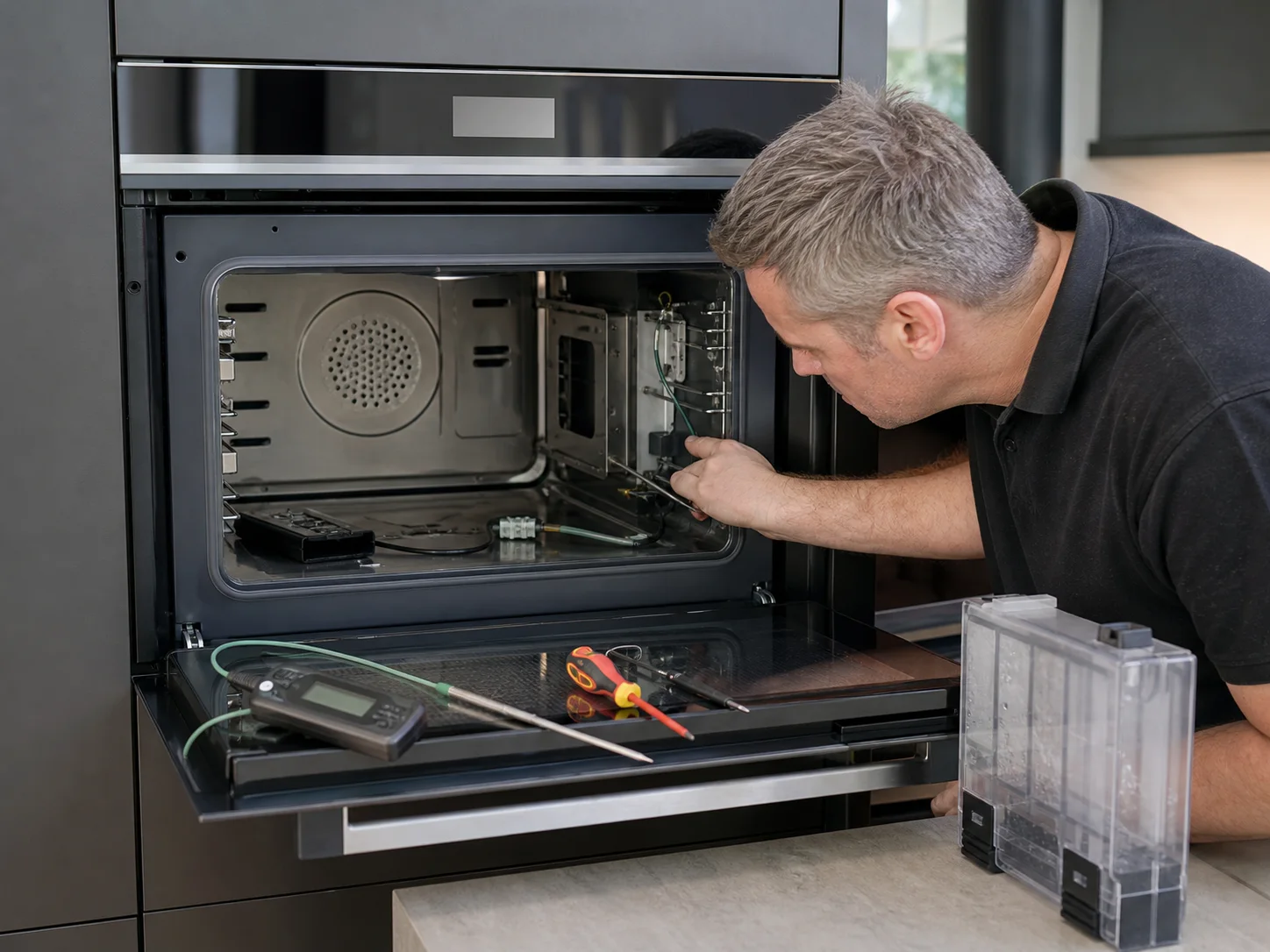
A Thermador steam oven can run a fan or produce conventional heat while the steam branch remains inactive. The useful question is not simply whether the oven turns on, but whether water leaves the reservoir or supply, reaches the generator, heats, enters the cavity, and drains at the expected stage.
Safe checks you can make first
- Record the exact cooking mode and stage where steam should begin
- Note reservoir level, pump sound, preheat behavior, visible steam, conventional heat, and error messages
- Photograph scale evidence, reservoir connection, cavity drain, and door seal without opening service panels
- Do not repeatedly restart a dry, leaking, or overheating cycle
- Photograph the complete Thermador steam oven model and serial tag
- Preserve visible frost, water, messages, and temperature readings before resetting or cleaning
Stop for gas odor, smoke, damaged wiring, active leaks near electrical parts, or repeated breaker trips. Avoid internal gas, refrigerant, or live-voltage work and arrange professional service.
Common causes behind the symptom
Water never leaves the reservoir or supply
Reservoir sensing, connection, pump, valve, tubing, flow measurement, or a control command can leave Thermador steam oven without water.
Scale restricts the water or generator path
Mineral accumulation can reduce flow, interfere with sensing, or insulate the generator. Approved maintenance does not replace electrical diagnosis.
The steam heater does not energize
Heater, thermal protection, sensor, wiring, relay, and control conditions can prevent steam while the interface and fan still operate.
Temperature or level feedback is inaccurate
Sensors and control interpretation determine fill and heating transitions. A plausible display does not prove the internal feedback is correct.
Steam escapes or drains incorrectly
Door sealing, valves, pumps, cavity drains, and condensation management can reduce visible steam or end the cycle early.
What the symptom pattern tells us
No pump sound and an unchanged reservoir point earlier in the water path. Pump sound with no visible steam raises delivery, scale, heater, sensing, or control questions. Conventional heat with no steam separates the steam branch from a total heating failure.
How professional diagnosis narrows the cause
Service observes the Thermador steam oven sequence from reservoir recognition through pump or valve delivery, generator heating, temperature feedback, cavity entry, door retention, and drain operation.
Likely repair scope
Repair may involve reservoir sensing, a pump, valve, tubing, descaling path, generator or heater, thermal protection, sensor, drain equipment, door seal, wiring, or controls. The failed stage determines access and parts.
Model boundary and identification
Thermador steam ovens span reservoir and control generations. The complete model tag determines the water path, service program, heater arrangement, and code definitions.
Photograph the complete Thermador steam oven model and serial tag because production revisions can change controls, wiring, water components, access, and compatible replacement parts.
Frequently asked questions
What should I record before service for Thermador steam oven?
Record the exact operating stage, temperatures where relevant, error messages, sounds, recent changes, and clear photos of the original frost, water, door, reservoir, mold, or installation condition.
Should I order the most common Thermador steam oven part first?
No. The same visible symptom can begin in temperature, airflow, water, mechanical, electrical, sensing, control, or installation conditions. The failed stage should be tested first.
Why is the full Thermador steam oven tag needed?
Model suffixes and serial generations can change components, wiring, controls, doors, water paths, and service procedures without a major change in exterior appearance.
When should the appliance remain off?
Stop for leaking into cabinetry, uncontrolled steam, smoke, electrical odor, damaged wiring, or breaker trips. Allow the cavity to cool before inspection and never bypass reservoir, door, or thermal safety inputs.
Ghost Appliance Repair is an independent service company and is not affiliated with or endorsed by Thermador or its manufacturer.