
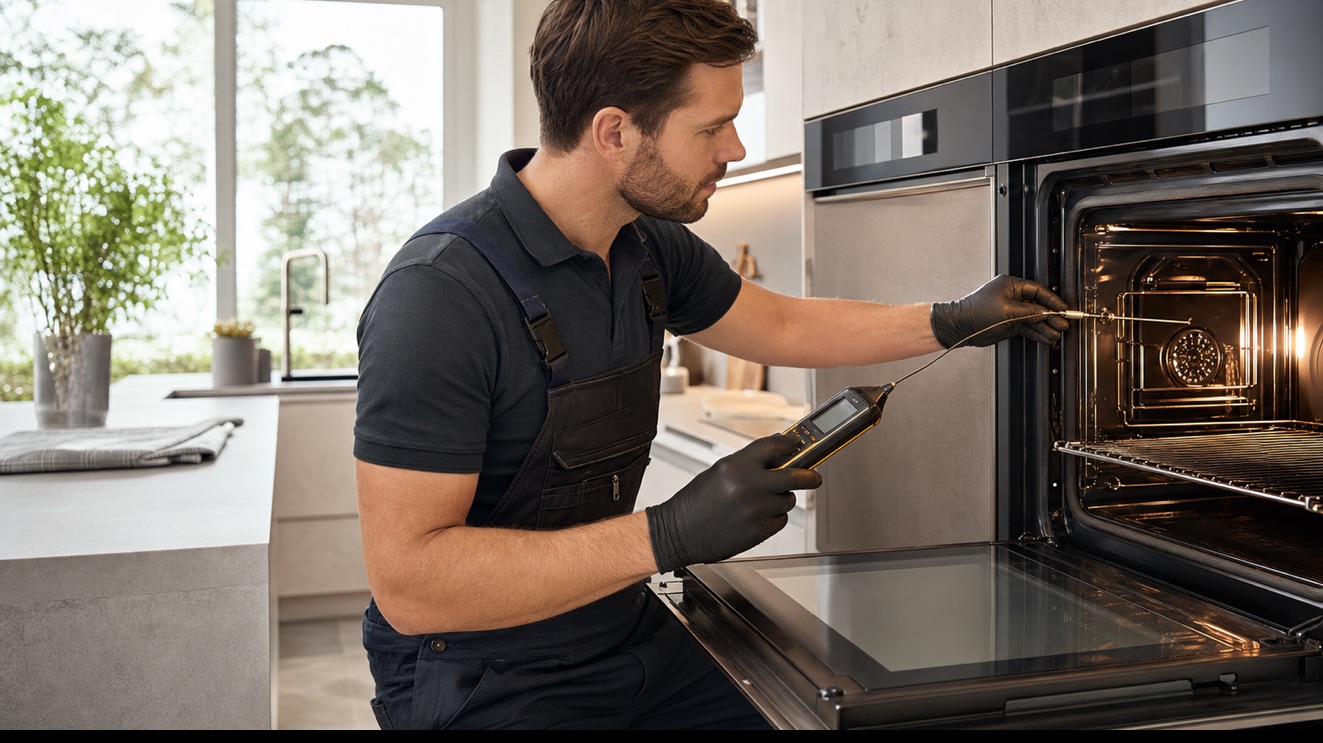
Thermador oven electronics monitor several inputs before allowing the next operating step. If the product cooks at an inaccurate temperature, preserve the selected program, affected zone or compartment, and the point where progress stops. That context keeps a sensor, module, or power symptom from being mistaken for a confirmed failed part.
Safe checks you can make first
- Observe several complete heating cycles
- Compare bake and convection results
- Use a consistent rack position and cookware
- Note whether one cavity or every mode is affected
- Record the complete model number and any message before resetting power
- Stop for smoke, burning odor, gas odor, active water near electricity, or repeated breaker trips
Stop for gas odor, smoke, damaged wiring, active leaks near electrical parts, or repeated breaker trips. Avoid internal gas, refrigerant, or live-voltage work and arrange professional service.
Common causes behind the symptom
Calibration is masking a performance fault
A small consistent offset may be adjustable, but wide swings, slow recovery, and mode-to-mode differences point toward heating, sensing, airflow, or module trouble that calibration cannot repair.
The oven sensor is reporting the wrong temperature
Sensor resistance, mounting, electrical path, and module interpretation affect cycling. A countertop thermometer reading alone is not enough to identify which part of the feedback path is inaccurate.
A heating circuit is open
A failed element, connection, relay, thermal device, or supply path may remove all or part of the heat. Resistance, voltage, and command tests identify the interrupted point.
The convection system is not moving air normally
A fan motor, blade, bearing, relay, electrical circuit, or obstruction may change thermal reading distribution and create noise. Fan behavior must be compared across the modes that use it.
Door hinges or alignment have changed
A worn hinge, bent receiver, heavy panel, gasket interference, or damaged door structure may prevent even closure. Forcing the door may add damage to glass, locks, and surrounding cabinetry.
Read the operating pattern before resetting
A stable small offset is different from wide swings, slow recovery, or one side cooking faster. Mode and cavity comparisons help distinguish calibration from a heating circuit, fan, sensor, or door loss.
Document the active zone, cavity, compartment, or cycle when the oven cooks at an inaccurate temperature. Include the exact display state and recent power, cleaning, plumbing, or installation events before attempting a reset.
What a complete diagnosis should confirm
A complete test measures cycling while checking sensor response, heating output, relay commands, convection airflow, supply power, and door sealing. Calibration should follow, not replace, those checks.
Thermador diagnosis must distinguish calibration is masking a performance fault, the oven sensor is reporting the wrong temperature, a heating circuit is open, the convection system is not moving air normally, door hinges or alignment have changed. Model-specific readings from sensors, modules, loads, and the electrical path provide the evidence for repair; a displayed symptom by itself does not.
Model and installation details change the repair
Single and double wall ovens, ranges, and steam-capable products can use different sensors and calibration steps. Share model, cavity, mode, target, and observed results.
Stop for uncontrolled heat, smoke, gas or electrical odor, or breaker trips. Avoid critical cooking until a large or changing error is corrected.
Frequently asked questions
What can cause this Thermador oven problem?
Thermador products can reach this symptom through calibration is masking a performance fault, the oven sensor is reporting the wrong temperature, a heating circuit is open, the convection system is not moving air normally, door hinges or alignment have changed. The affected functions, sequence, and model-specific readings show which path is actually present.
Should I reset this Thermador appliance before service?
Document the active zone, cavity, compartment, or cycle when the oven cooks at an inaccurate temperature. Include the exact display state and recent power, cleaning, plumbing, or installation events before attempting a reset. One reset described in the exact user guide may be reasonable after a power event, but repeated resets can conceal an intermittent fault.
Can I keep using the appliance?
Stop for uncontrolled heat, smoke, gas or electrical odor, or breaker trips. Avoid critical cooking until a large or changing error is corrected.
What information helps the technician prepare?
Provide the full model number, installation type, the first failed function, any code or alarm exactly as displayed, and the photos or temperature notes described above. Single and double wall ovens, ranges, and steam-capable products can use different sensors and calibration steps. Share model, cavity, mode, target, and observed results.
Ghost Appliance Repair is an independent service company and is not affiliated with or endorsed by Thermador or its manufacturer.