
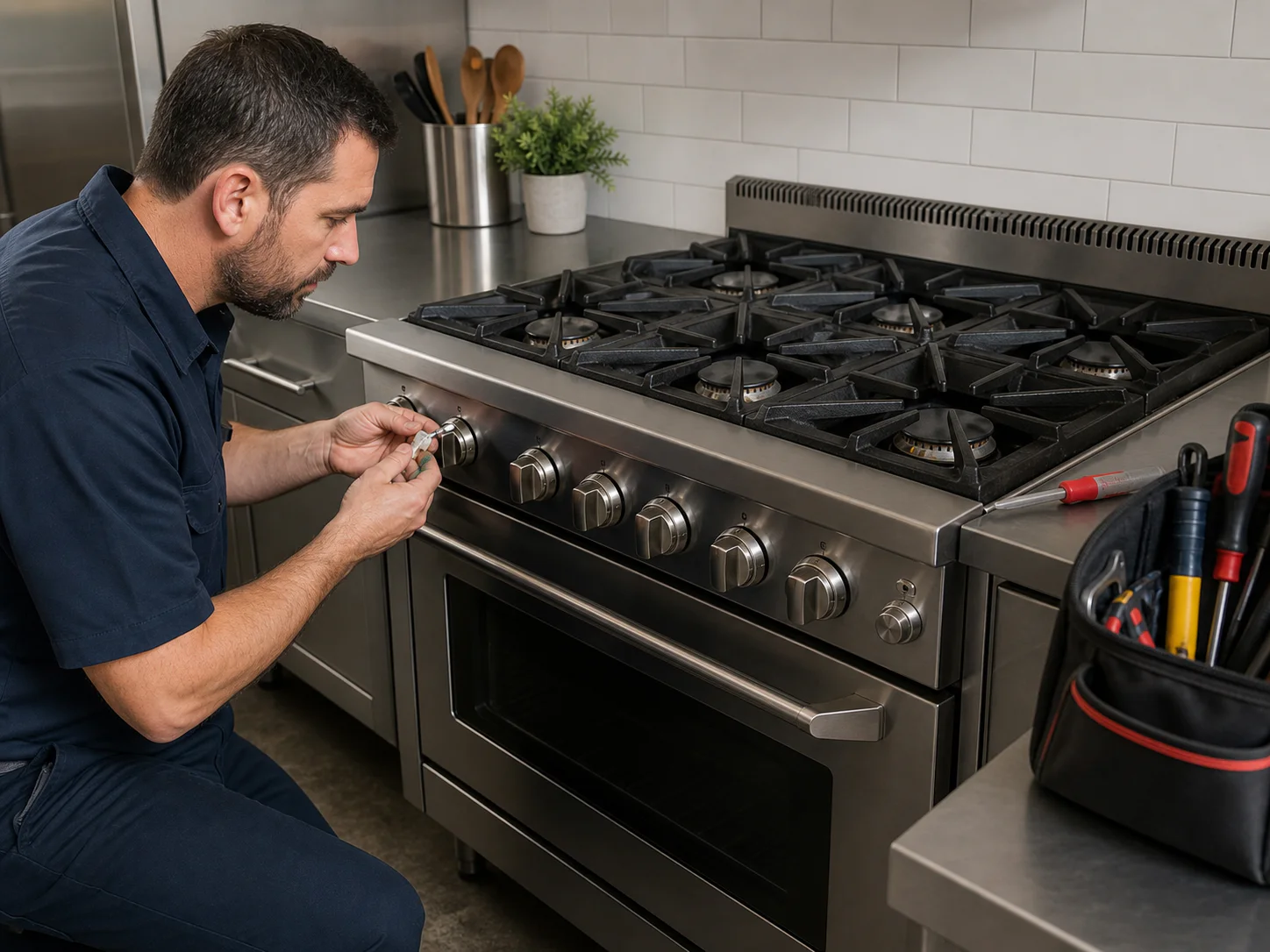
GR36 describes a 36-inch all-gas range family, but the complete number identifies burner-only, griddle, or charbroiler top configurations and fuel setup. Surface ignition and the gas oven are separate safety systems: working burners do not prove oven ignition, and an oven that heats does not clear one surface electrode or switch.
Identify the exact equipment first
- Identify the complete GR36 top configuration and fuel type
- Name the exact burner, griddle/charbroiler, or oven mode affected
- Record spark timing, flame pattern, oven ignition delay, temperature behavior, and gas odor
- Photograph the complete Wolf GR36 gas range family model and serial tag
- Record actual temperatures, error messages, noises, and the operating stage when the symptom appears
Protect people, property, and stored product first. Stop for gas odor, smoke, damaged wiring, active leaks near electrical parts, or repeated breaker trips. Leave internal gas, refrigerant, and live-voltage testing to a qualified technician.
Systems that shape the diagnosis
Sealed-burner ignition
Cap seating, ports, electrode, grounding, switch, wiring, spark module, and gas flow determine lighting and repeated clicking.
Gas oven ignition and heat
Ignition components, safety valve, gas delivery, controls, sensing, and burner flame establish whether the cavity can heat safely.
Top configuration modules
Griddle and charbroiler versions add distinct ignition, heat distribution, controls, grease, and airflow conditions.
Temperature and door performance
Sensor feedback, burner cycling, door gasket, hinges, and cavity airflow influence preheat and cooking accuracy.
Gas and electrical supply
An all-gas range still needs electrical power for ignition and controls. Fuel conversion, pressure, grounding, and supply must match the full model.
Platform and production context
GR Series 36-inch ranges include several top arrangements. The letters and numbers after GR36 identify burner count and optional cooking surface equipment.
The platform combines gas surface burners, an all-gas oven, spark ignition, safety valves, temperature control, cooling, ventilation, and heavy range installation.
Separate the symptom before selecting parts
One burner not lighting, all burners clicking, weak flame, griddle trouble, oven no-heat, delayed ignition, inaccurate temperature, and control loss require separate branches. Stop immediately for gas odor or delayed ignition.
Access, identification, and service planning
Diagnosis should begin without moving the range. Any pull-out requires gas shutoff, electrical isolation, anti-tip awareness, floor protection, and safe reconnection testing.
Record the complete GR36 model, configuration letters, fuel type, and serial number before selecting ignition, burner, valve, griddle, or oven parts.
Frequently asked questions
Why do GR36 surface burners work while the oven stays cold?
Surface and oven ignition use separate components and controls, so one system can operate while the other fails.
Does continuous clicking mean the spark module failed?
Not necessarily. Moisture, cap position, dirty ports, an electrode, grounding, a switch, wiring, or the module can create clicking.
Are all GR36 cooktops configured the same?
No. Burner-only, griddle, and charbroiler arrangements exist; the complete model identifies the top.
Why is the full Wolf GR36 gas range family serial information required?
Production revisions can change controls, wiring, hinges, water components, and compatible replacement parts while the visible model family remains similar. The full tag keeps service planning tied to the correct technical documentation.
Ghost Appliance Repair is an independent service company and is not affiliated with or endorsed by Wolf or its manufacturer. Brand and model names identify the equipment discussed. Service and parts availability depend on the complete model, serial generation, condition, and location.