
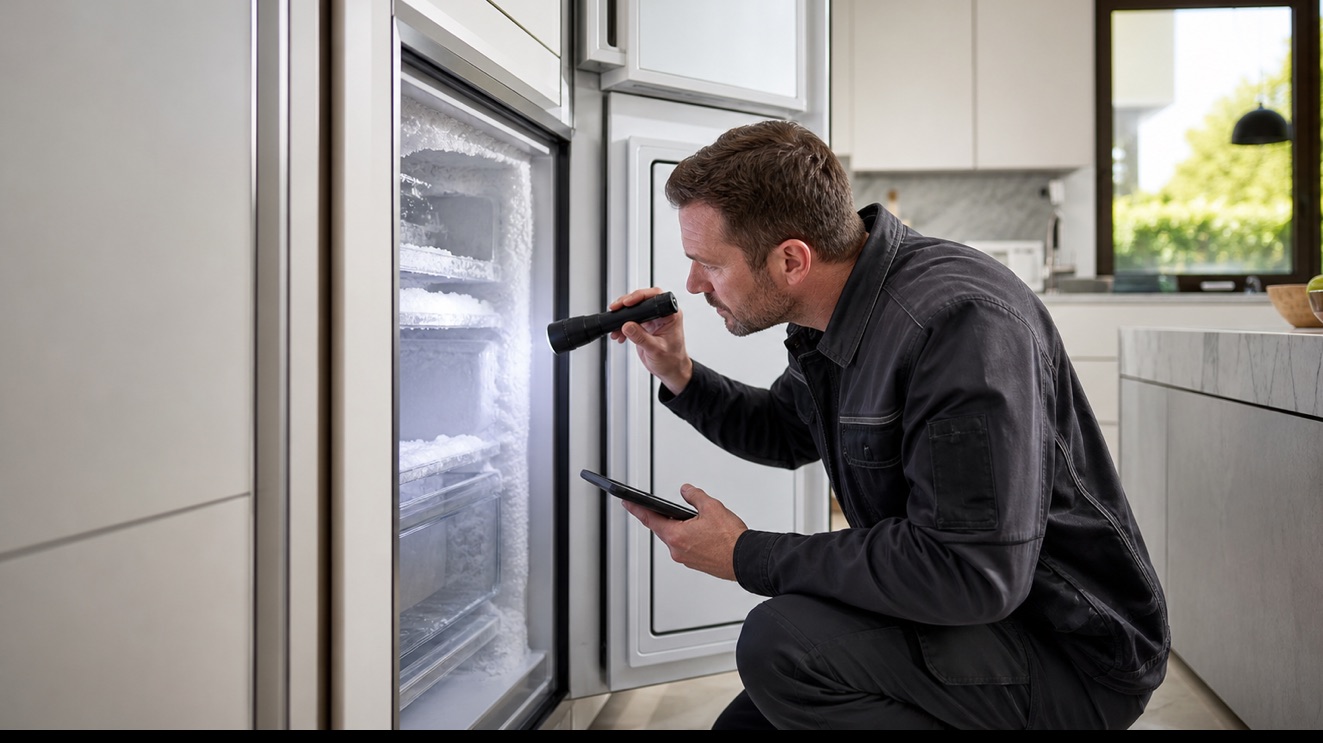
Viking freezer service begins by separating fuel, power, water, airflow, and mechanical behavior. When the product builds excessive frost, note the last normal step and whether the failure repeats from a cold start. That sequence helps distinguish a contained repair from a symptom created elsewhere in the machine.
Safe checks you can make first
- Photograph the frost before melting or removing it
- Confirm packages and ice do not block the door
- Look for frost concentrated near one edge or behind one interior panel
- Measure freezer temperature and note the trend
- Record the complete model number and any message before resetting power
- Stop for smoke, burning odor, gas odor, active water near electricity, or repeated breaker trips
Stop for gas odor, smoke, damaged wiring, active leaks near electrical parts, or repeated breaker trips. Avoid internal gas, refrigerant, or live-voltage work and arrange professional service.
Common causes behind the symptom
The door is not sealing evenly
Gasket damage, hinge wear, panel alignment, shelf interference, or a package in the opening might admit warm humid air. Frost and condensation often identify the edge where contact has changed.
The defrost system is not clearing ice
A heater, sensor, connections, drain, or controller fault might let frost cover the evaporator and close its air passages. Cooling performance usually declines as the ice layer becomes denser.
Interior airflow is restricted
A stopped fan, blocked return, dense loading, or hidden frost might leave one area warm even while the cooling system continues to operate. Air movement and the evaporator pattern must be checked together.
Defrost or wash water cannot reach the drain
A restricted hose, drain path, filter area, check valve, or pump might hold water where the controller does not expect it. The location and cycle stage narrow the obstruction.
Temperature feedback is inaccurate
A sensor, connections connection, or controller interpretation might start and stop function at the wrong time. The displayed setting must be compared with measured temperature and live part behavior.
Read the operating pattern before resetting
Snow near the opening usually indicates humid air entry, while dense frost behind an interior panel supports a defrost or airflow investigation. Ice on the cabinet floor can involve a drain or fill path.
Keep a short record of the load, setting, sounds, and timing surrounding the moment the freezer builds excessive frost. A photo or safe video is especially useful when the behavior disappears after power is cycled.
What a complete diagnosis should confirm
A complete diagnosis checks door and drawer contact, gaskets, switches, fan movement, evaporator frost pattern, heaters, sensors, drains, and control timing. The original frost location is important evidence.
For this Viking symptom, testing must separate the door is not sealing evenly, the defrost system is not clearing ice, interior airflow is restricted, defrost or wash water cannot reach the drain, temperature feedback is inaccurate. Fuel type, supply measurements, mechanical movement, and controller outputs need to agree before a repair decision is made.
Model and installation details change the repair
Freezer columns, combination cabinets, drawers, and bottom-freezer products use different evaporator, fan, and drain arrangements. The exact model shows which systems serve the affected area.
Move food if temperature rises. Do not chip ice with a knife or apply uncontrolled heat, and stop use if water reaches electrical components or the door can no longer close.
Frequently asked questions
What can cause this Viking freezer problem?
Viking products can reach this symptom through the door is not sealing evenly, the defrost system is not clearing ice, interior airflow is restricted, defrost or wash water cannot reach the drain, temperature feedback is inaccurate. The affected functions, sequence, and model-specific readings show which path is actually present.
Should I reset this Viking appliance before service?
Keep a short record of the load, setting, sounds, and timing surrounding the moment the freezer builds excessive frost. A photo or safe video is especially useful when the behavior disappears after power is cycled. One reset described in the exact user guide may be reasonable after a power event, but repeated resets can conceal an intermittent fault.
Can I keep using the appliance?
Move food if temperature rises. Do not chip ice with a knife or apply uncontrolled heat, and stop use if water reaches electrical components or the door can no longer close.
What information helps the technician prepare?
Provide the full model number, installation type, the first failed function, any code or alarm exactly as displayed, and the photos or temperature notes described above. Freezer columns, combination cabinets, drawers, and bottom-freezer products use different evaporator, fan, and drain arrangements. The exact model shows which systems serve the affected area.
Ghost Appliance Repair is an independent service company and is not affiliated with or endorsed by Viking or its manufacturer.